We have energy if we get enough sleep, if we eat robustly and eagerly, and if life is filled with shared wanderings that we can look forward to. We need repetition, and comfort, and rest, but also ample space to dream, and the power to bring some of those dreams into reality. So many people under capitalism lack all of those things. Their jobs are a chronic illness they must cradle, manage, and make endless sacrifices for every single day.
Work is a Chronic Illness – Medium
Year 2023
across their many islands – two films
I made two short films of the exhibition of this body of work. I wanted to document the universe they temporarily created…The second one features me flicking through the booklet/zine which was created for this exhibition, containing the piece of writing done in collaboration with Becky Beasley.
The music playing during the videos is ANOHNI’s latest album, My Back Was a Bridge For You To Cross, 2023, which I was listening to extensively in the final preparatory stages of the exhibition and while it was on. The poem on the wall is The Underworld by Hannah Enerson, from her book of poems The Kissing of Kissing, Milkweed Editions, 2021. This poem remained in my mind from the moment I first read it, and formed a touchstone for the duration of the making of this work.
ACROSS THEIR MANY ISLANDS
This body of work is the culmination of a year and three months of reflection and research, which took place mainly at my studio and exhibition space, Glisk, in Burntisland, Fife. At the end of the period of working, I created an exhibition from what I had been doing, which was an interesting process in itself. The exhibition is running from September 21 to October 01 2023.
The central themes are relationally, our complex entanglement with the more-than-human world, and the neurodiversity paradigm as a standpoint of social justice, which stands alongside other movements for a future of abundance and diversity. The creation of the work was rooted in readings and engagement with thinkers, artists and poets about neurodiversity, ecology and social justice. Listening to music played a profound role in helping to direct and inspire the gestural, stimmy movements needed to create the works.
The title comes from the introduction to an interview between Edouard Glissant, the Martinique philosopher and poet, and Hans Ulrich Obrist:
“These archipelagos must encounter each other because, across their many islands, interdependence and difference co-exist – and, in this way, they carry the energy that is necessary for our whole globe, our whole world. We might currently believe that this energy derives from military and economic force, but this is not so. It lies in the ideas and poetics of how we organise the world…They open us to a sea of wandering: to ambiguity, to fragility, to drifting, which is not the same as futility.“

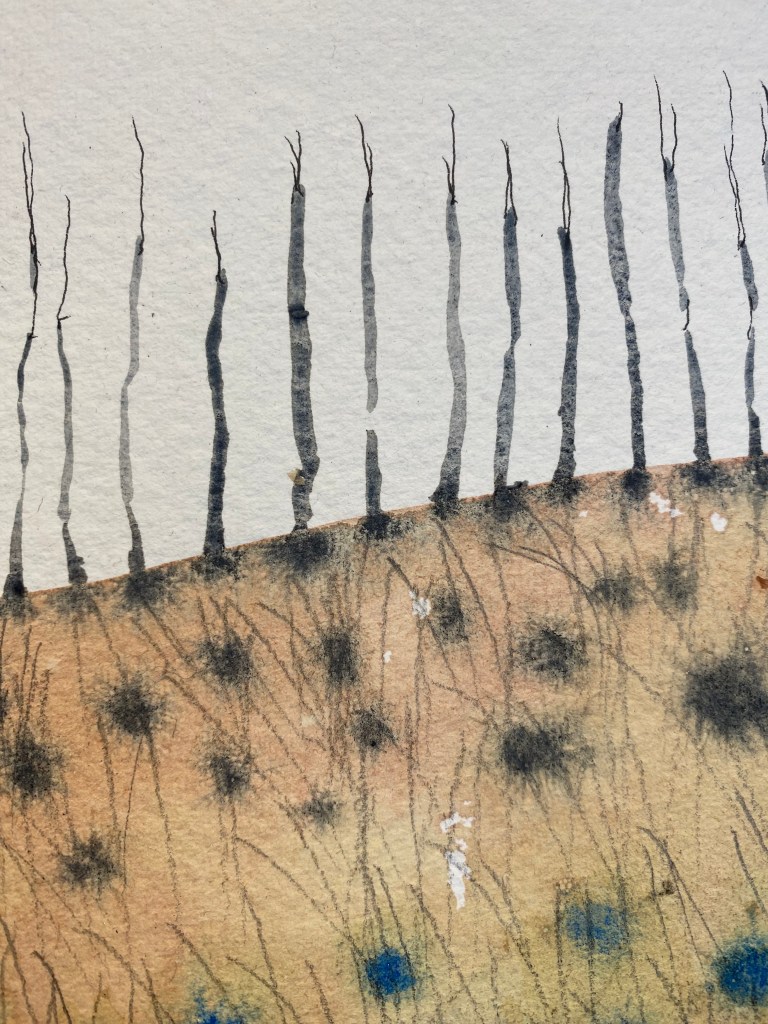

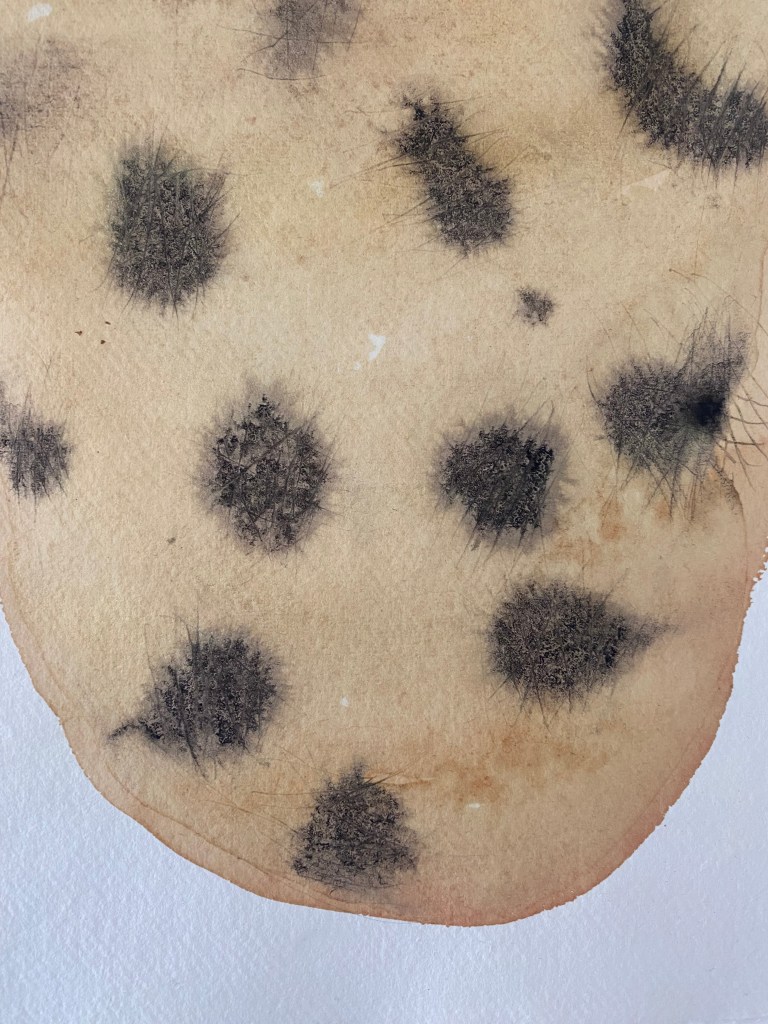
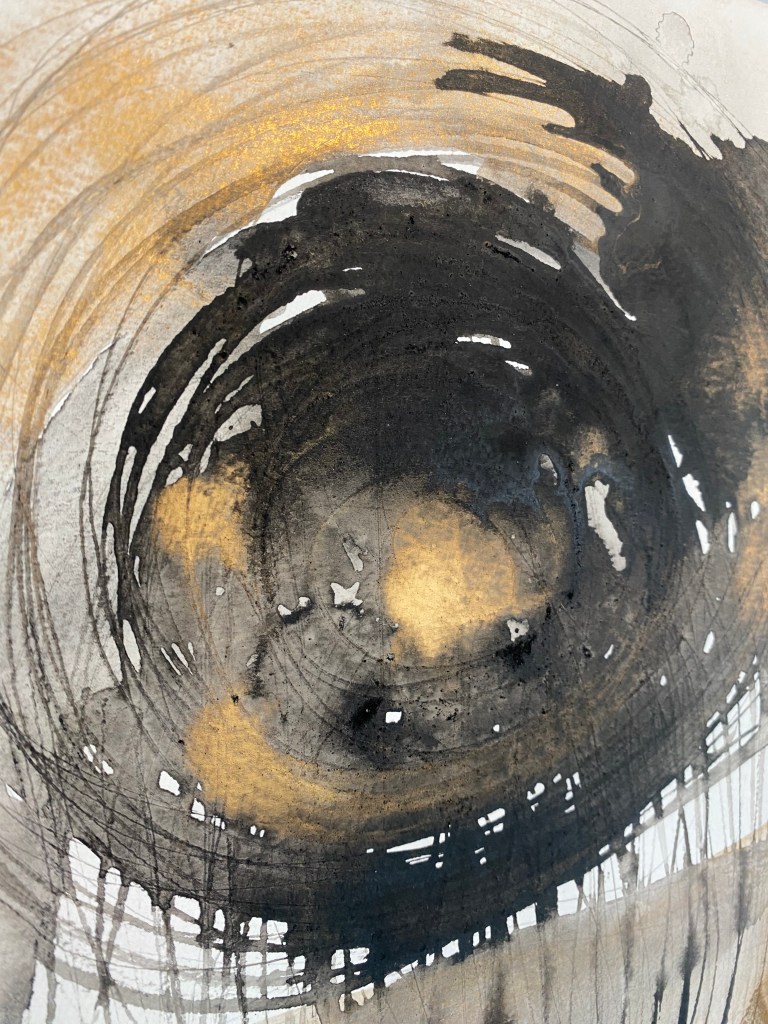
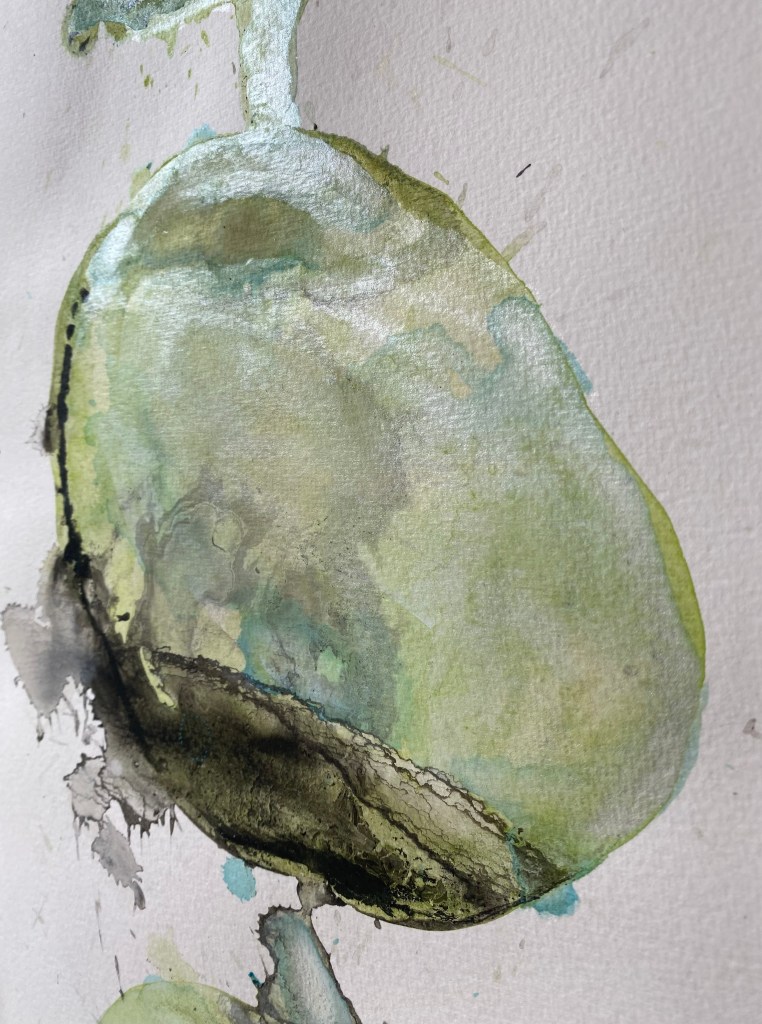
Quote: Maret Anne Sara
I have a strong need to seek and manifest hope…These exhausting experiences of constant fights within a structure of unbalanced and unjust power relations […are] why I chose the stomachs as an expressive material. It became central in telling the story of how we as beings react to colonialism and carry life experiences.
Sara quoted in Katya Garcia-Anton and Liv Brissach, When the Red Calves Arrive, the Hope Returns/; Sami Healing and Sensate Sovereignty in Maret Anne Sara’s Practice – Catnosat
Quote: Hans Ulrich Obrist on Edouard Glissant
I would first of all like to say something about archipelagos. I think the idea of the archipelago — as a place where we can begin to understand and resolve the contradictions of the world — should be propagated. The archipelagos of the Mediterranean must encounter the archipelagos of Asia, and the archipelago of the Antilles. These archipelagos must encounter each other because, across their many islands, interdependence and difference coexist — and, in this way, they carry the energy that is necessary for our whole globe, our whole world. We might currently believe that this energy derives from military or economic force, but that is not so. It lies in the ideas and poetics of how we organize the world. Continents weigh us down. They are thick and sumptuous. Archipelagos are able to diffract, they create diversity and expansiveness, they are spaces of relation that recognize all the infinite details of the real. Being in harmony with the world through archipelagos means inhabiting this diffraction, while still rallying coastlines and joining horizons. They open us to a sea of wandering: to ambiguity, to fragility, to drifting, which is not the same as futility.
The Archipelago Conversations, an excerpt – Hans Ulrich Obrist – Interview with Edouard Glissant
European Review of Books https://europeanreviewofbooks.com/hans-ulrich-obrist-interviews-edouard-glissant/en
Quote: Maret Anne Sara
It seems that it is totally forgotten that we are all the time talking and communicating with everything around us. It is a communication that does not happen in words but via the body and instinct. As long as you are a human being on earth you are a part of it. These messages come to you too, whether you want it or not. With the situation the world is in today, I think it is becoming increasingly important to strengthen this form of communication.
Sara quoted in Katya Garcia-Anton and Liv Brissach, When the Red Calves Arrive, the Hope Returns/; Sami Healing and Sensate Sovereignty in Maret Anne Sara’s Practice – Catnosat, the Sami Pavilion
Quote: Kirsten Thisted
Much emphasis has been placed on different types of ‘capital’ in societies, for instance, ‘social capital’ or ‘cultural capital’. However, emotions also circulate and accumulate a sort of ‘capital’, aligning some bodies with each other within a community while marginalising other bodies.
Kirsten Thisted – Blubber Politics: Emotional Economies and Post-Postcolonial Identities in Contemporary Greenlandic Literature and Art, Sami Art and Aesthetics, Aarhus University Press, 201
Quote: Kirsten Thisted
While having proven a powerful strategy for achieving rights and recognition, the discourse of ‘indigeneity’ obviously comes at a price, not least because this discourse emanates from Western European philosophy and colonial mindsets – indigenous peoples remain stuck in the position of civilisation’s Other – whether in a negative sense as primitive brutes or in a positive image as a kind of corrective. In both cases indigenous peoples are defined as different….Contesting these types of dichotomous and essentialised identities is part of a current International trend.
Kirsten Thisted – Blubber Politics: Emotional Economies and Post-Postcolonial Identities in Contemporary Greenlandic Literature and Art, Sami Art and Aesthetics, Aarhus University Press, 2017
Quote: Mykola Bilokonsky
When you look at the art that has resonated with you most in your life, what you’re going to find are the maps that show you where you are, where you’re going, where you want to be and how to get there.
That art that *shook you* in ways you couldn’t name? Those were *your* maps.
Because everyone I talk to is stuck somewhere in this wilderness, doing their best. I can’t guide them out, this shit is too deep. The work is finding their way back home to themselves.
I feel like a lot of Autistic artists have their pre-acceptance work, their breakthrough work, and their post acceptance work. After Yoshimi Wayne Coyne stops even pretending to be making ‘normal’ music. They go post-music weird.
Finding my map
When I started this practice period in June 2022 I had begun with an exploration, almost academic in its nature, of concepts about autism such as monotropism, the double empathy problem, masking, the ‘lost’ generation of late identified autistic adults, bottom up thinking, increased neuroconnectivity, and so forth. The work I began with was light and playful, illustrating some of these concepts in ways I hoped were illuminating, with qualia within ‘figures’ and their interactions, connectivity, and a kind of joy in discovering a way of describing myself, people who made sense to me and the way I felt, thought, experienced my senses, and processed the world around me. I found the concept of the neurodiversity paradigm through Nick Walker to be enlightening (I love a good paradigm shift), and so much of my own thinking clicked into place.
As the work has progressed and I pushed on with my reading and exploration (foragings and burrowings) I found an even deeper and closer connection with what I have always felt, but struggled to articulate myself in language, through writers Nick Walker, Melanie Yergeua, Bayo Akomolafe, Katherine May, Chris Martin and the poets Amelia Bell, Hannah Emerson and Adam Wolfond, and thinkers as diverse as Édouard Glissant, bell hooks, Audre Lorde and Timothy Morton, as well as Saami artists and thinkers and the music of David Byrne, Elizabeth Fraser and Fiona Apple. This was a futurity, a way of acting and looking forward while honouring the complexity of both humans and the more than human world, through diversity, abundance and queering. My work, too, evolved to somewhere both instinctive and exact, with spontaneity and intentionality, tapping into the kind of painting practice I love, where the flow is coming from a source I can’t place cognitively. I put things down while I’m getting a clear message, even if the message is ‘keep going, I don’t know yet’, and I stop when I reach ‘enough’. The work is figurative, through metaphors of ponds and vessels, and landscapes, in book form and through photography and text from poetry and songs.
 JANE FRANCIS