Over the last couple of weeks I’ve found that I’ve been too unsettled to do any work. The speed and intensity of the Coronavirus pandemic has swept all of our lives ahead of it. Its been enough to stay at home with my children and husband (who is working remotely from home), keeping us safe and healthy.
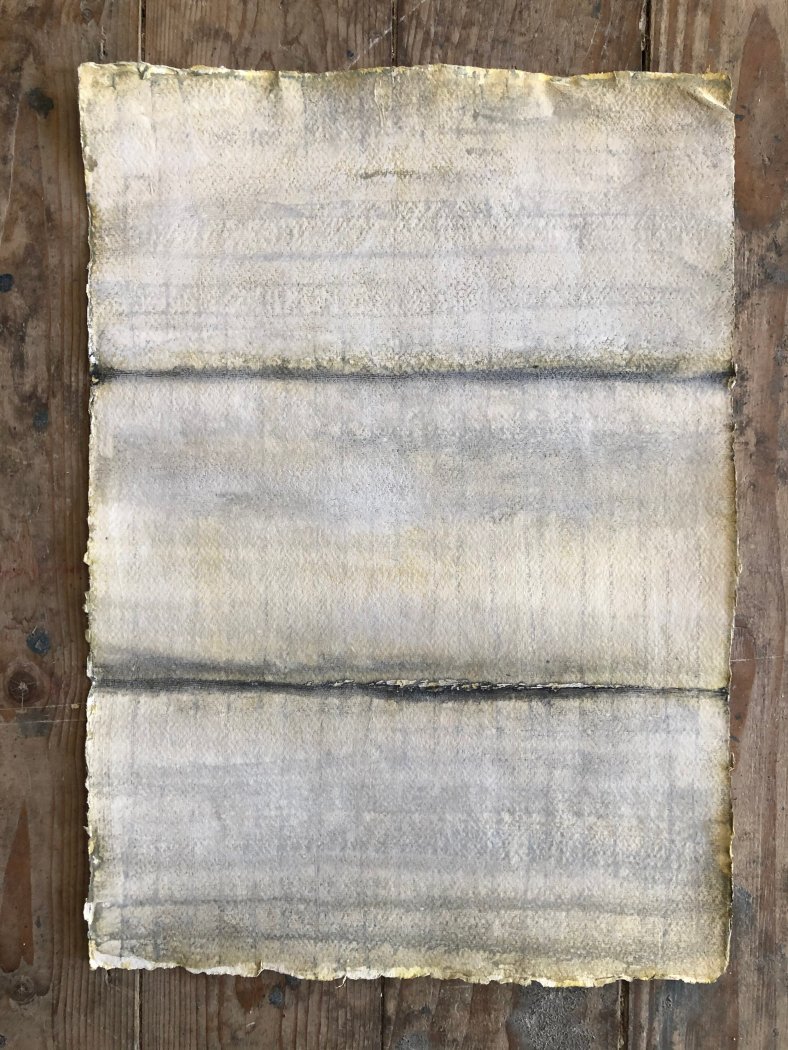
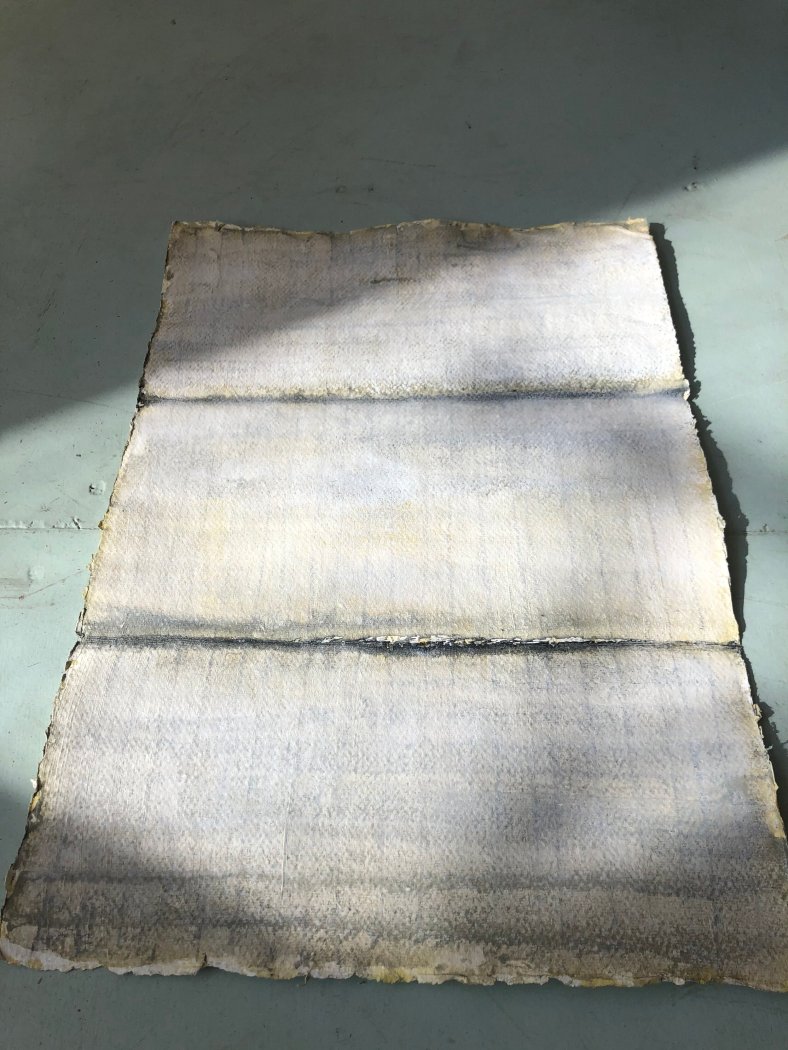
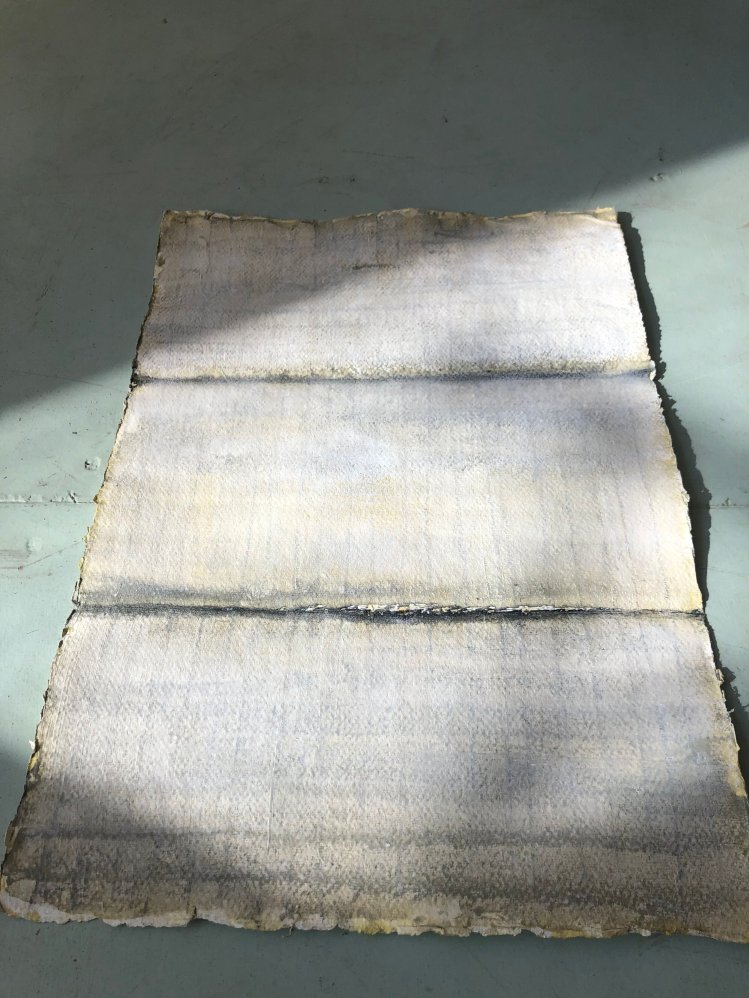
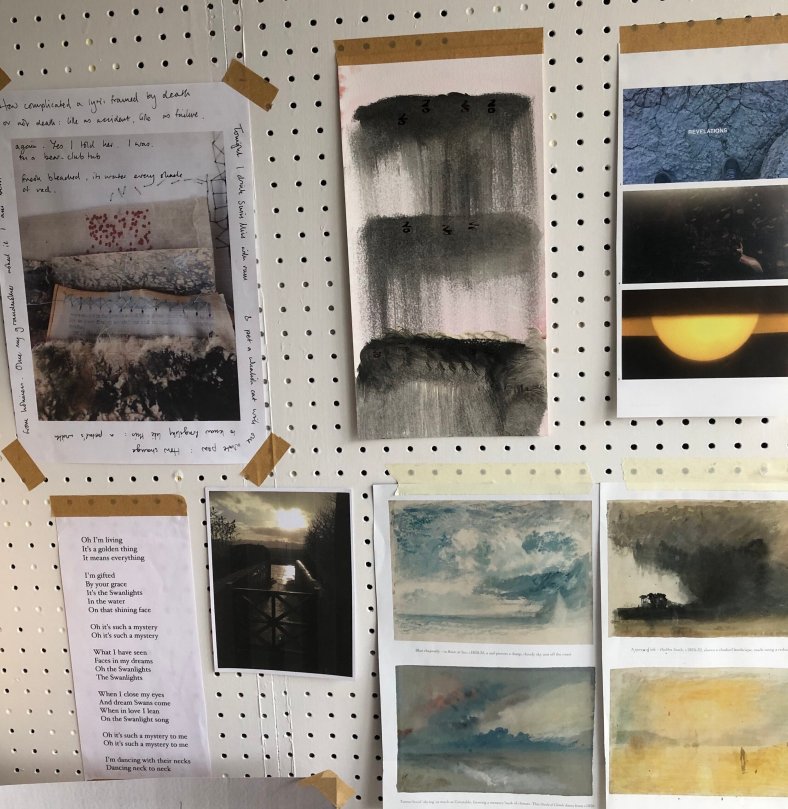
I did spend some time trying some studio practice exercises, just using line and breath, but I found myself feeling sickened, distracted, fearful. In the meantime I have been pinning up random images which attract me, and song lyrics which I find meaningful. Some of the images are found; work by other people, and some are my own – a photograph of our gate I took one day as I left and found a vast silvery sky ahead of me, some experiments I had been doing with graphite, etc.
My previous post was added with some haste, and I intended to write more about it, but events, both worldwide and close to home took over; the coronavirus pandemic and subsequent societal lockdown here in Scotland.
The work was done at a weekend retreat with Janet Melrose at her studio in Crieff on 22nd and 23rd February 2020. We met on the Saturday morning and briefly discussed our worries concerning the coronavirus outbreak. It was on our minds, but it was in no way the overwhelming situation we are in today.
Janet had previously sent us a call to action; to respond to the word ‘palimpsest’. Do some research – think about what it might mean to us. I immediately responded to the word, as I have been working on renovating two conjoined shops in Burntisland in Fife (more on that later), and had really enjoyed the process of uncovering layers of history in the place, both removing and leaving traces of the past. When I have been leaving some trace, I feel like I am ‘framing’ them, helping them to be seen anew.
The group found that we sparked off each other very well, and some interesting discussions ensued. Janet had provided some written material to look through, and I was immediately drawn to a print out of an essay by Brian Dillon in the Tate etc magazine from 2006.
“‘Erasure is merely a matter of making things disappear: there is always some detritus strewn about in the aftermath…some reminder of the violence done to make the world look new again.’ Brian Dillon looks at undoing, from Joseph Kosuth’s Freudian wall texts, to Soviet Russia’s doctored photographs.”
In particular the essay contains two photographs: one is an undated photograph of Voroshilov, Molotov, Stalin and Nikolai Yezhov, commissar of water transport. In the second photo Yezhov has been ‘removed’ from the image. He was shot in 1940.
I found the images very powerful. There can be no type of erasure more violent than the erasure of an individual’s existence for political or ideological reasons. The doctoring of a photograph to change the narrative about the shifting political landscape is a frightening act of erasure because it is an attempt to skew the views of people living through the period, to propagandise the actions of powerful figures and governments. Ultimately it is an attempt to change the course of history by changing people of the future’s knowledge.
Janet had also provide us with some materials, including pages torn from a book, and purely by coincidence the pages I was given were from a book about Russia; its geography and history
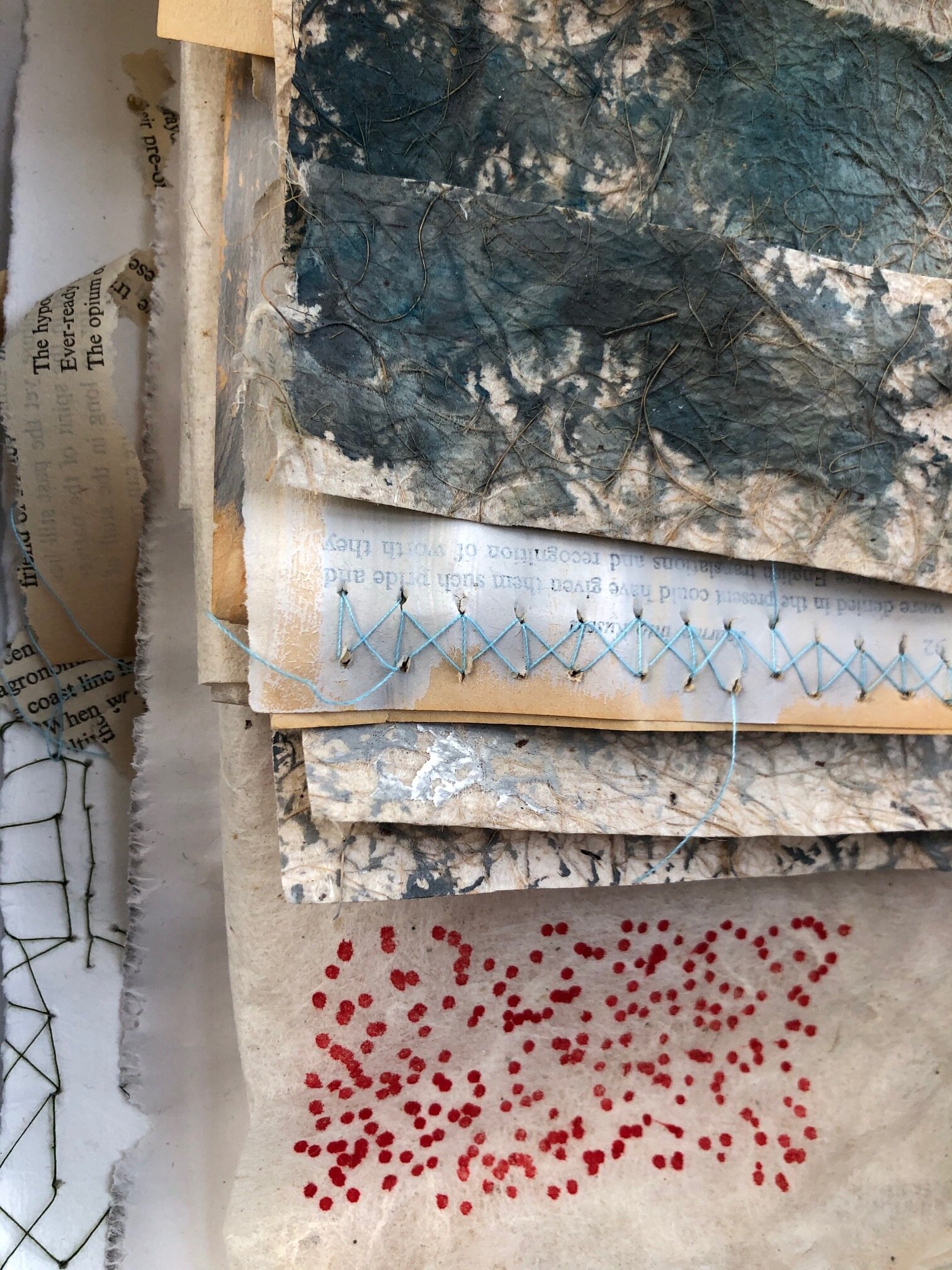
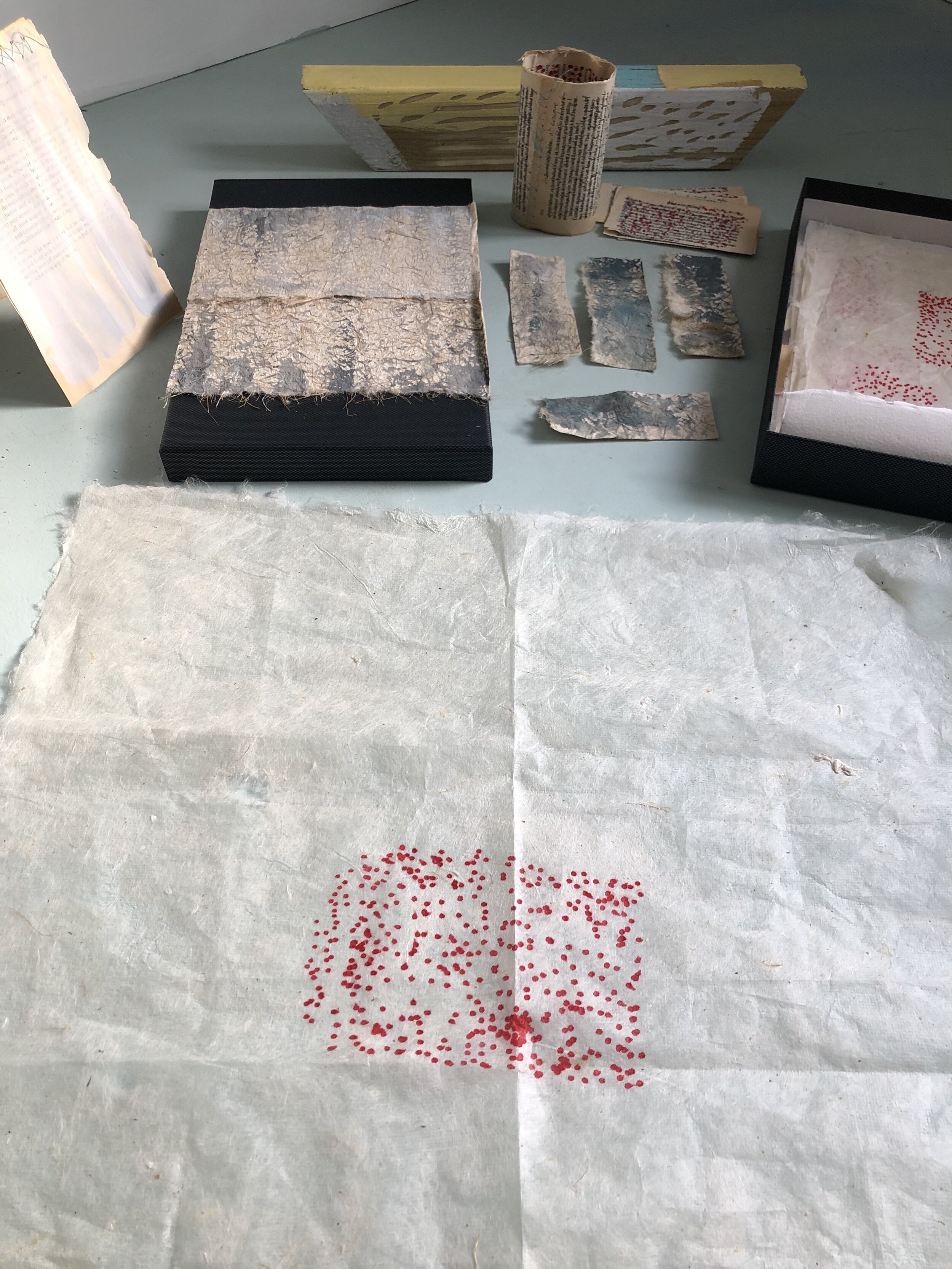
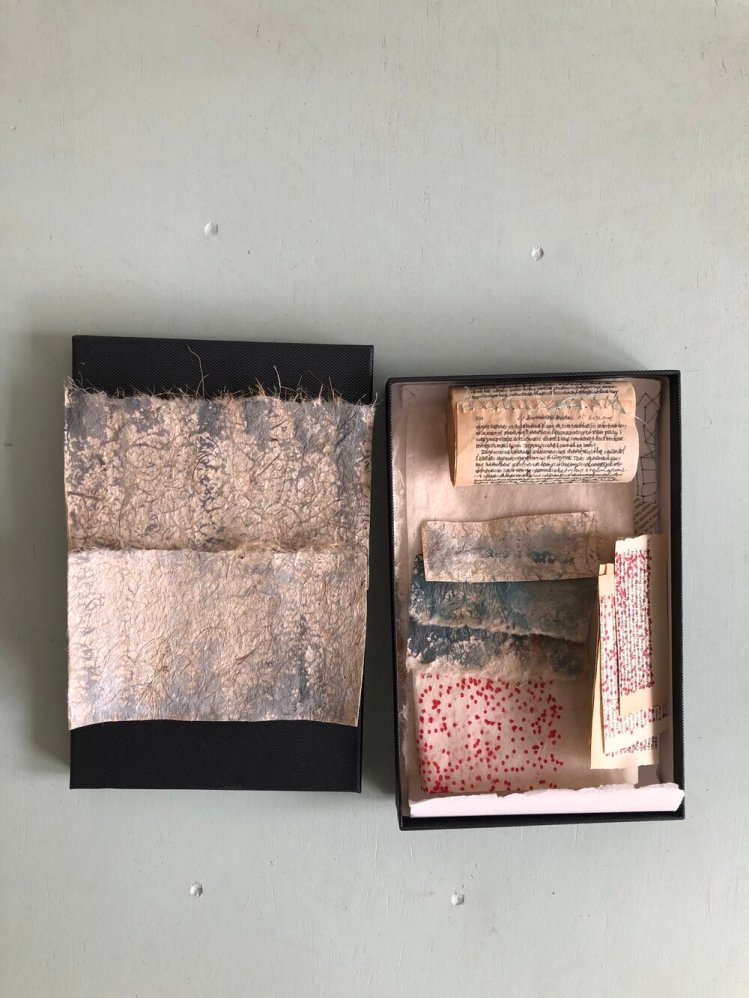
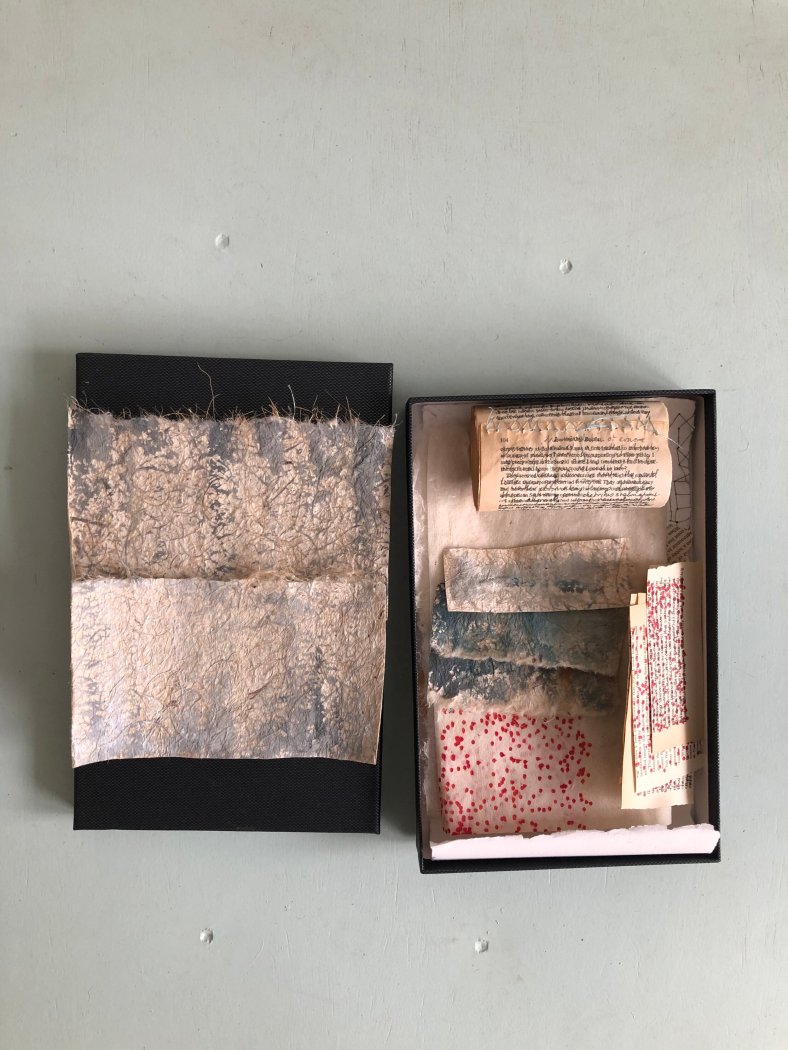
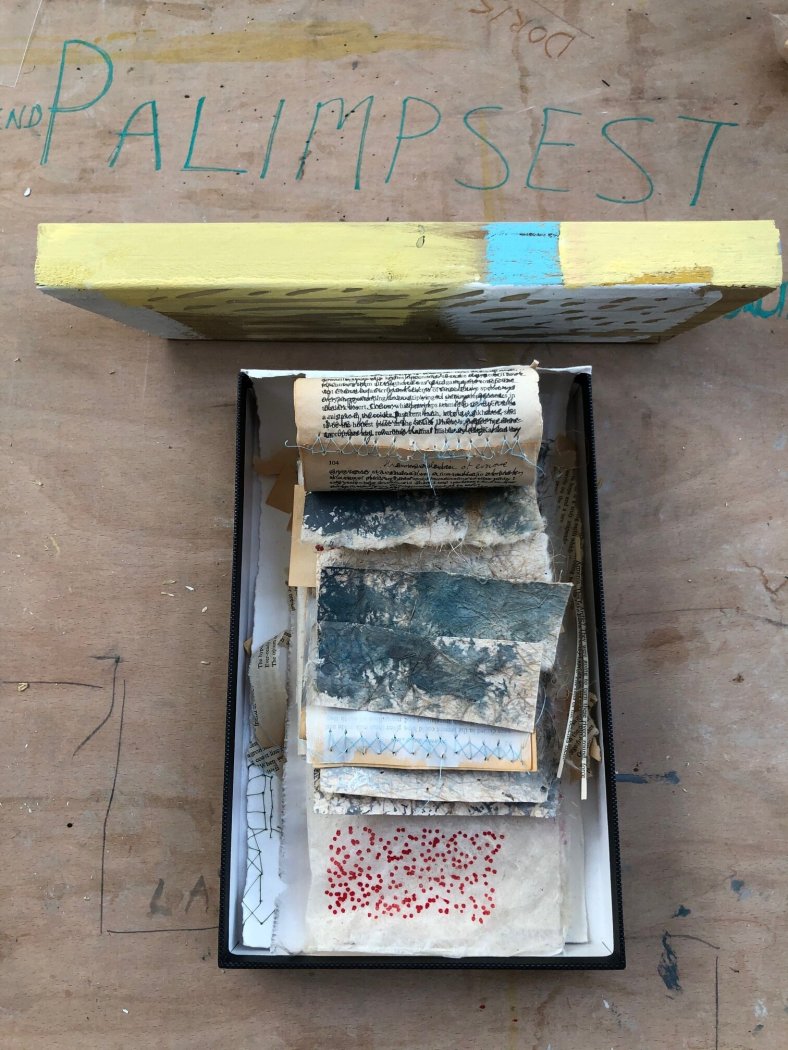
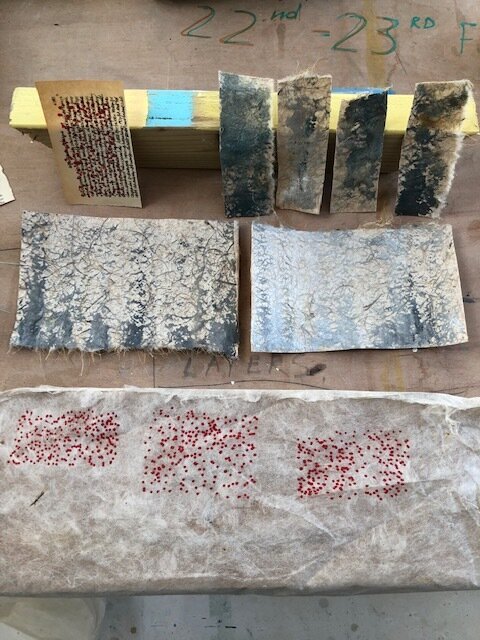
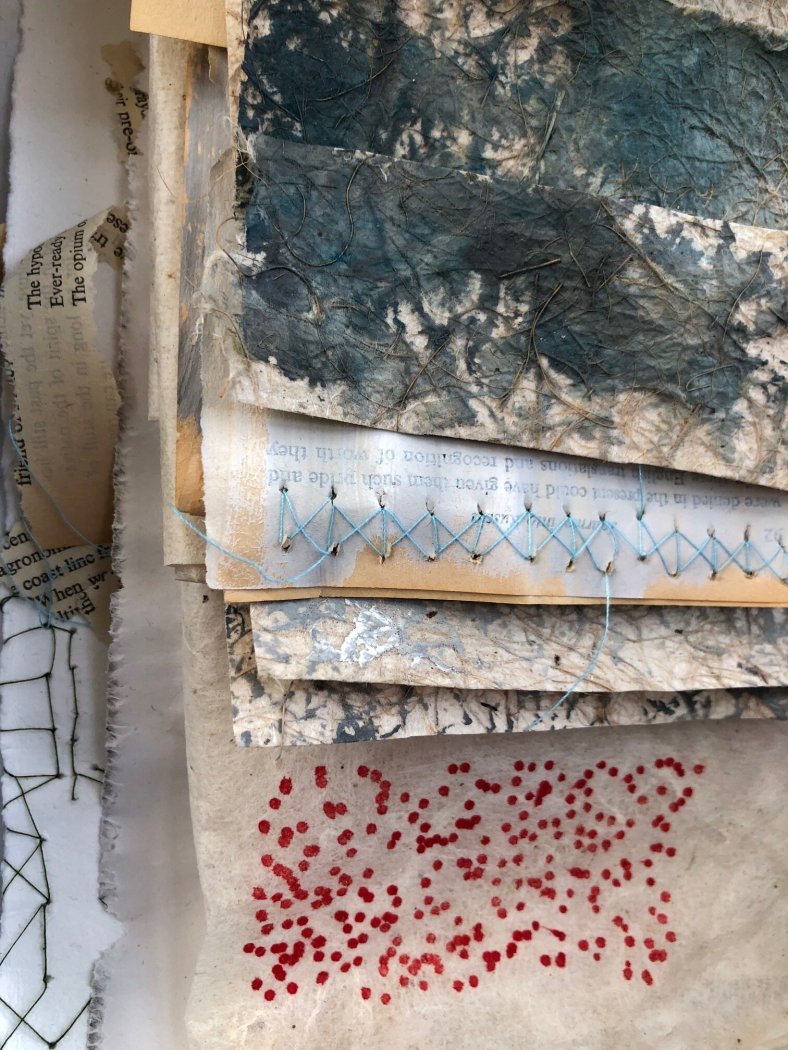
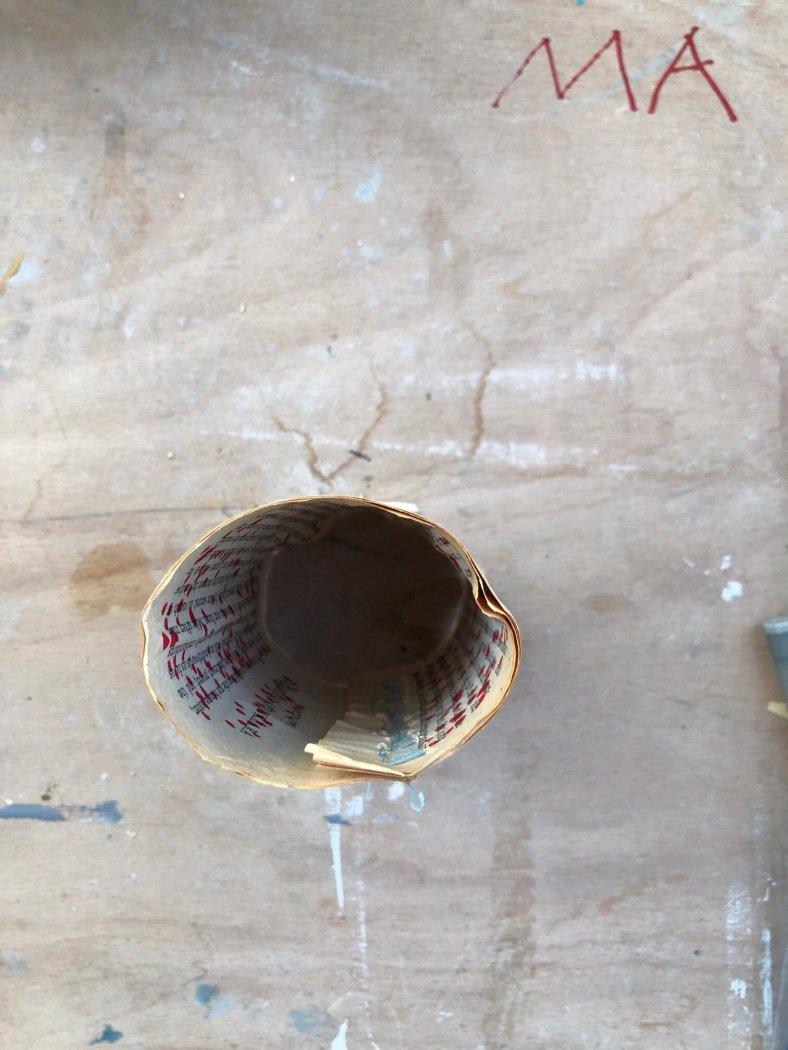
I started the process by handwriting the quote above over the printed text. I repeated the same lines over and over again, beginning each new paragraph at the end of the previous one, destroying any ‘sense’ which could be previously gained. I used a red marker to randomly block out pieces of the text, using a method of dotting vigorously though sheafs of thin cloth-like paper, the patterns on the cloth creating randomly assigned patterns. it wasn’t until afterwards that I realised the cloths themselves were part of the work. The dot making shook the table and made a disturbing and disruptive noise, however the other people at the workshop seemed to enjoy the disruption. In retrospect the movement was performing a violent act of erasure. Using rough blue stitching I covered over text and joined pages of text together randomly.
#block-9e21bf4e5b7c71b691d2 .sqs-gallery-block-grid .sqs-gallery-design-grid { margin-right: -20px; }
#block-9e21bf4e5b7c71b691d2 .sqs-gallery-block-grid .sqs-gallery-design-grid-slide .margin-wrapper { margin-right: 20px; margin-bottom: 20px; }
My previous post was added with some haste, and I intended to write more about it, but events, both worldwide and close to home took over; the coronavirus pandemic and subsequent societal lockdown here in Scotland.
The work was done at a weekend retreat with Janet Melrose at her studio in Crieff on 22nd and 23rd February 2020. We met on the Saturday morning and briefly discussed our worries concerning the coronavirus outbreak. It was on our minds, but it was in no way the overwhelming situation we are in today.
Janet had previously sent us a call to action; to respond to the word ‘palimpsest’. Do some research – think about what it might mean to us. I immediately responded to the word, as I have been working on renovating two conjoined shops in Burntisland in Fife (more on that later), and had really enjoyed the process of uncovering layers of history in the place, both removing and leaving traces of the past. When I have been leaving some trace, I feel like I am ‘framing’ them, helping them to be seen anew.
The group found that we sparked off each other very well, and some interesting discussions ensued. Janet had provided some written material to look through, and I was immediately drawn to a print out of an essay by Brian Dillon in the Tate etc magazine from 2006.
“‘Erasure is merely a matter of making things disappear: there is always some detritus strewn about in the aftermath…some reminder of the violence done to make the world look new again.’ Brian Dillon looks at undoing, from Joseph Kosuth’s Freudian wall texts, to Soviet Russia’s doctored photographs.”
In particular the essay contains two photographs: one is an undated photograph of Voroshilov, Molotov, Stalin and Nikolai Yezhov, commissar of water transport. In the second photo Yezhov has been ‘removed’ from the image. He was shot in 1940.
I found the images very powerful. There can be no type of erasure more violent than the erasure of an individual’s existence for political or ideological reasons. The doctoring of a photograph to change the narrative about the shifting political landscape is a frightening act of erasure because it is an attempt to skew the views of people living through the period, to propagandise the actions of powerful figures and governments. Ultimately it is an attempt to change the course of history by changing people of the future’s knowledge.
Janet had also provide us with some materials, including pages torn from a book, and purely by coincidence the pages I was given were from a book about Russia; its geography and history
I started the process by handwriting the quote above over the printed text. I repeated the same lines over and over again, beginning each new paragraph at the end of the previous one, destroying any ‘sense’ which could be previously gained. I used a red marker to randomly block out pieces of the text, using a method of dotting vigorously though sheafs of thin cloth-like paper, the patterns on the cloth creating randomly assigned patterns. it wasn’t until afterwards that I realised the cloths themselves were part of the work. The dot making shook the table and made a disturbing and disruptive noise, however the other people at the workshop seemed to enjoy the disruption. In retrospect the movement was performing a violent act of erasure. Using rough blue stitching I covered over text and joined pages of text together randomly.


I have been concentrating for the last 6 months or so on renovating and designing a double space in Burntisland, Fife, and growing for myself a place within this interesting and thriving community. From taking over the space in September 2019 }(previously it was a shop called ‘Spiritual Oasis), I”ve been using my techniques of ‘bubbling up’ to allow its development to flourish under a ‘what now?’ basis. The space development represents for me an opportunity to be in control, other than circumstance, of the process. Even my interactions with those who have helped me to realise the ideas, both paid and unpaid, have been part of the process, allowing them to influence, and in some instances, completely change tack. My need for control of my own process comes from a lingering post traumatic trigger of hating others being in control of my body, my consciousness, or my life. While in many ways effects on these are outwit our control (“and boy has that been proven recently with the rise of coronavirus), I realised that I had to at least attempt to control something completely. I wanted the spaces to ultimately.
Well that has certainly been derailed now!
And yet, like some other people have been talking about, has this not in fact bought me a bit more time? Does it not feed back in to the control of the space. I had set up some things to take place, an exhibition and a pop up shop, and was feeling a bit free-wheeling about both. a kind of ‘well I have to get started sometime’ feeling that I was not entirely comfortable with. The exhibition (a joint one of the CFOS members, including myself), has been cancelled. the pop up shop, of artisan beer, has been postponed.
Now I can inhabit the space entirely at my own pace, and also, of course, entirely on my own for however many weeks/months this is going to take. I can create exhibitions in the windows, for those walking past to see, a gift for free of thoughts, and of free thoughts, unencumbered by any sense of ‘should’. I don’t really are what people think the space should be. I want to lead, not follow. I want to create something which those who are drawn to it will feel is a gift. And, strangely, this time is opening up all sorts of things for people’s expectations, or at least there is a potential for this to happen, and not to be righted again. a topsy turveyign perhaps. I want art to be as challenging as it wants to be, about subjects as serious as I want them to be, without feeling that i’m ‘too serious’ or whatever.


“Mourning can be one of the most enriching, vivid things you ever do, if you lean into it fully. There’s a feeling of joy that eventually arises…”
“There is a sense of a painting as a contained wave of light.”
“From pure sensation to the intuition of beauty, from pleasure and pain to love and the mystical ecstasy and death – all the things that are fundamental, all the things that, to the human spirit, are most profoundly significant, can only be experienced, not expressed. The rest is always and everywhere silence.
After silence that which comes nearest to expressing the inexpressible is music.”
from the essay ‘The Rest is Silence’ from Music at Night and Other Essays, 1931
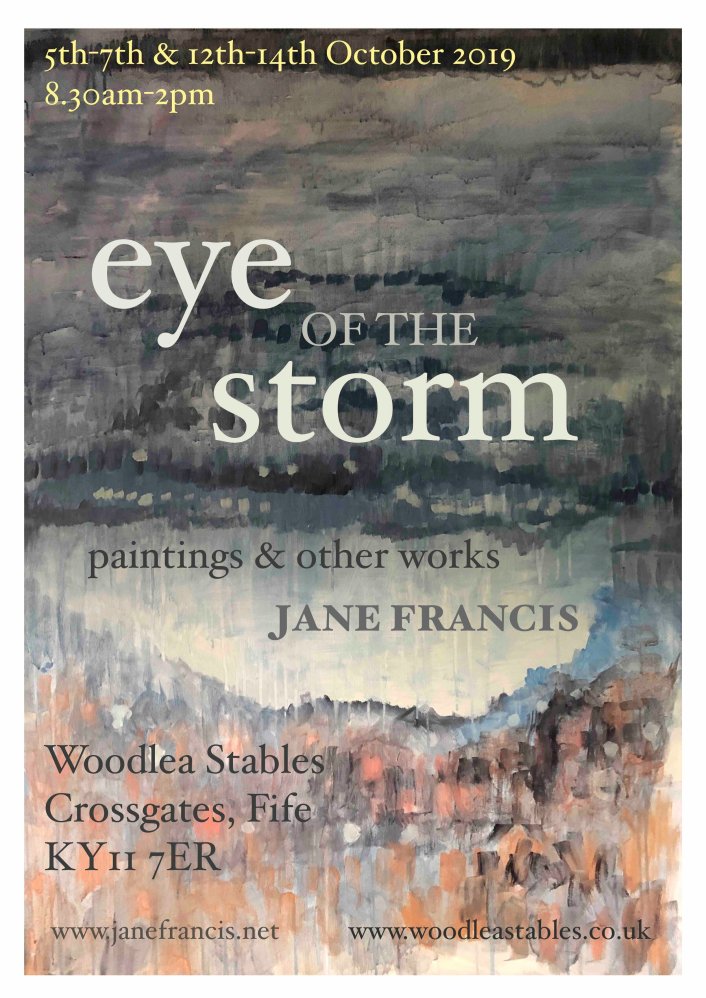
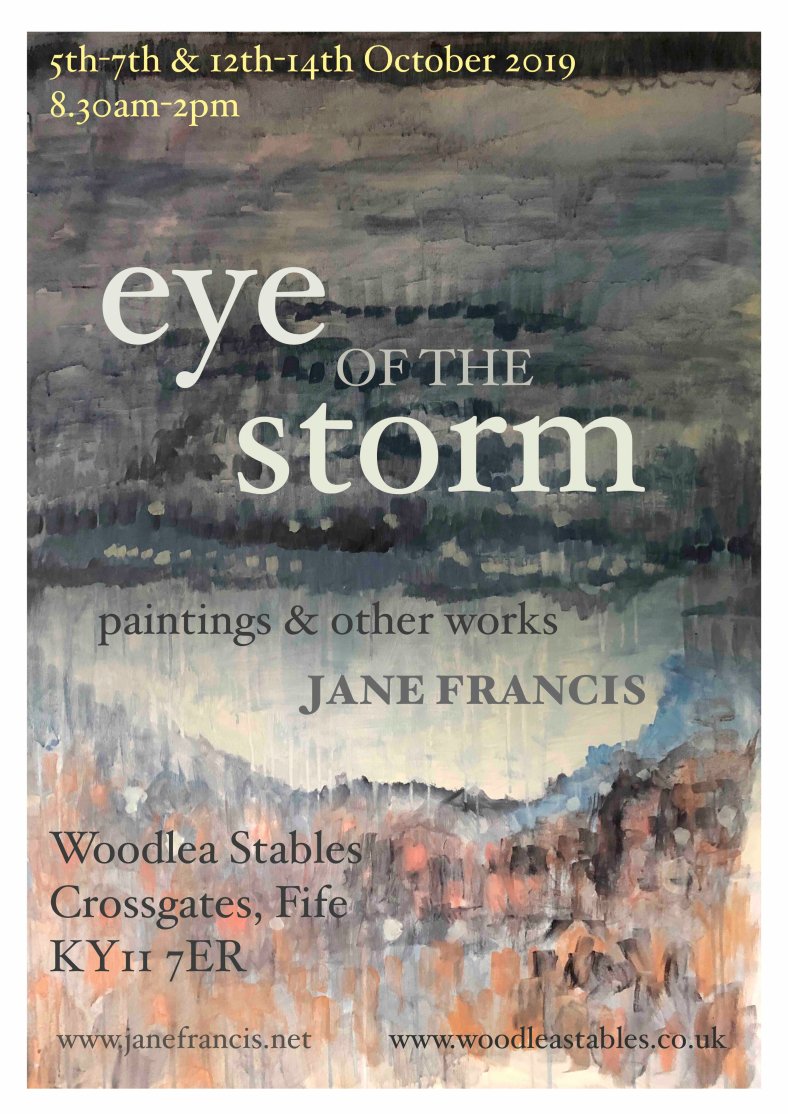
I have a collection of my paintings, along with some photographs which were the basis for their development, on show at this lovely venue in Fife.
View fullsize
View fullsize
View fullsize
View fullsize
#block-yui_3_17_2_1_1570037141945_88018 .sqs-gallery-block-grid .sqs-gallery-design-grid { margin-right: -47px; }
#block-yui_3_17_2_1_1570037141945_88018 .sqs-gallery-block-grid .sqs-gallery-design-grid-slide .margin-wrapper { margin-right: 47px; margin-bottom: 47px; }
I recently had a body of work on show at this excellent venue in Fife.
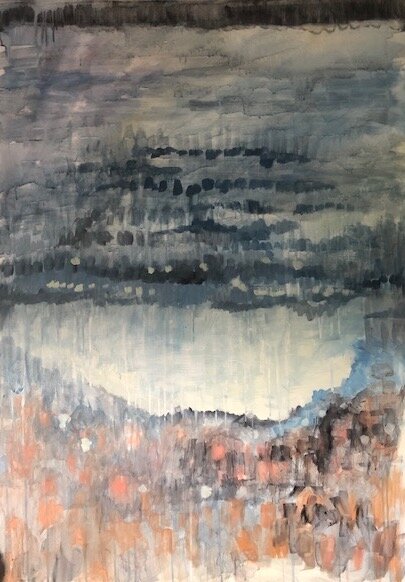
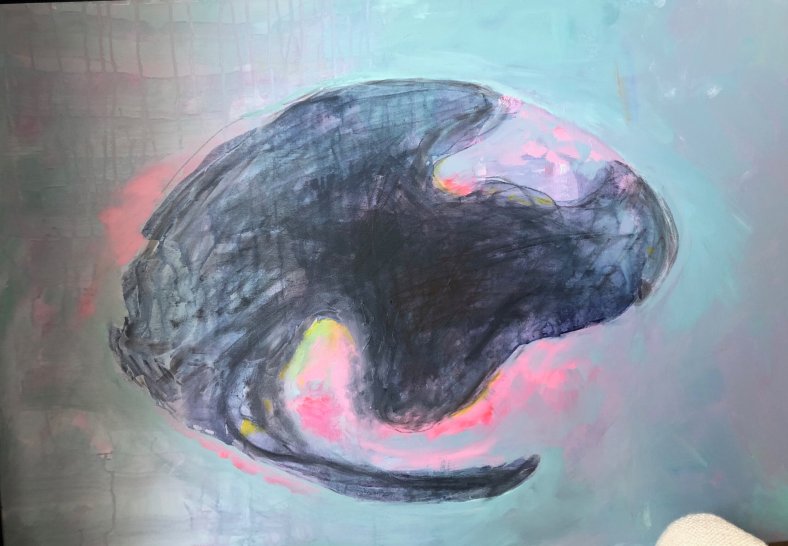
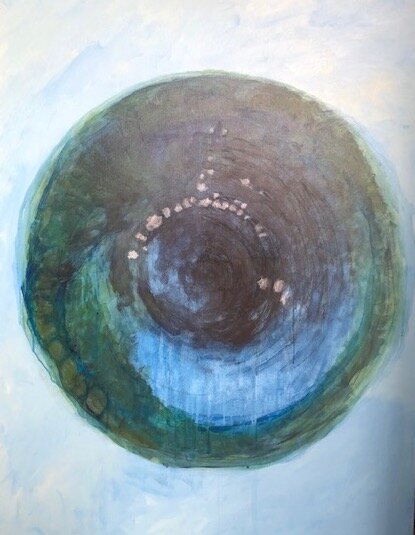
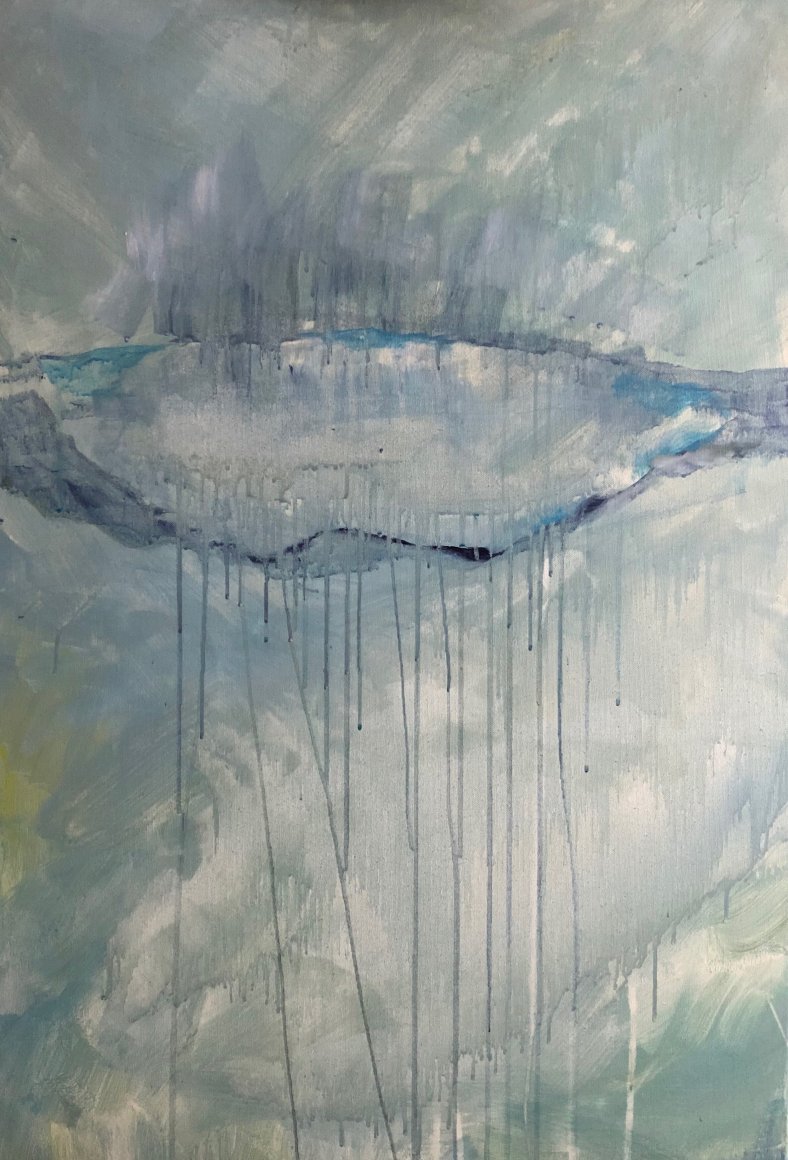
The paintings of this collection are developed around the key concept of the ˜eye of the storm’; openings at the core of unseen chaos and forces beyond control. They are an exploration of liminal space, or dissociation, rupture, but also of comfort, presence, even exquisite pleasure. I am interested in works of art with Duende, the awareness of death, corruption and absence even while enjoying sensual pleasures of the senses and deep feeling. it is a philosophy of ‘be here right now’ and of abundance.
The openings I have created are sometimes available and sometimes forbidden. I am thinking about how we might deal with traumatising knowledge and experiences, such as lived realities created and controlled by far away people in power; politics, economics, resources, climate breakdown and species extinction. The eye of the storm is not the same as burying your head in the sand, or being ignorant of the facts, its more akin to dissociation, a place which is vital for the survival of the most essential parts of what it is to be a human. Its a place where a lot of work is being done.
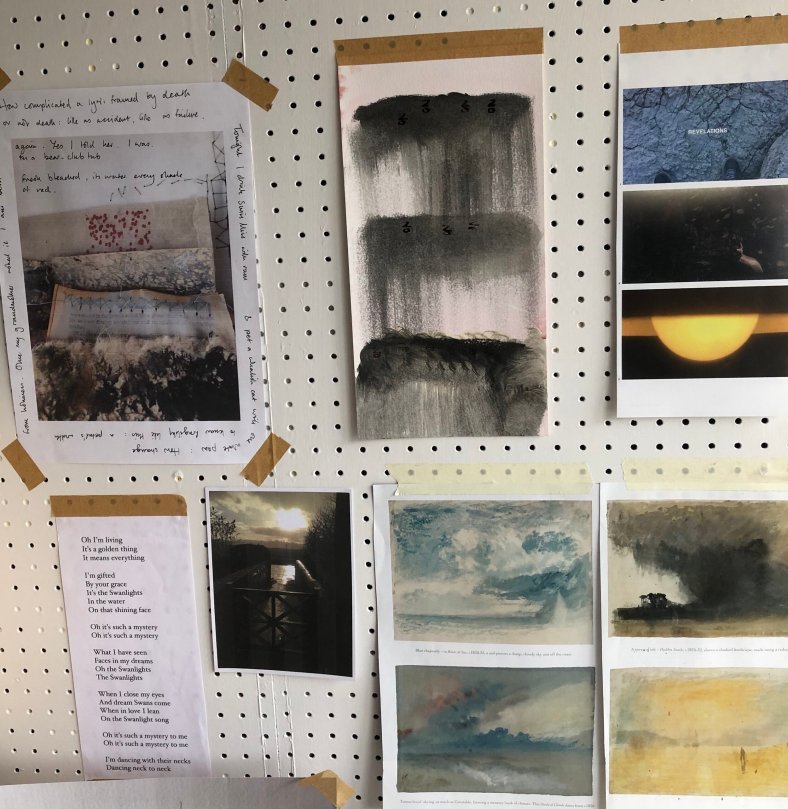 I had been noticing some sort of theme emerging, but I was reluctant to push for it at the present moment. I was happy for it just to happen. I recognised a continuation of the ‘eye of the storm’ imagery and was planning to move ahead with another painting, inspired by the images, in particular a sense of light shining through darkness.


 JANE FRANCIS