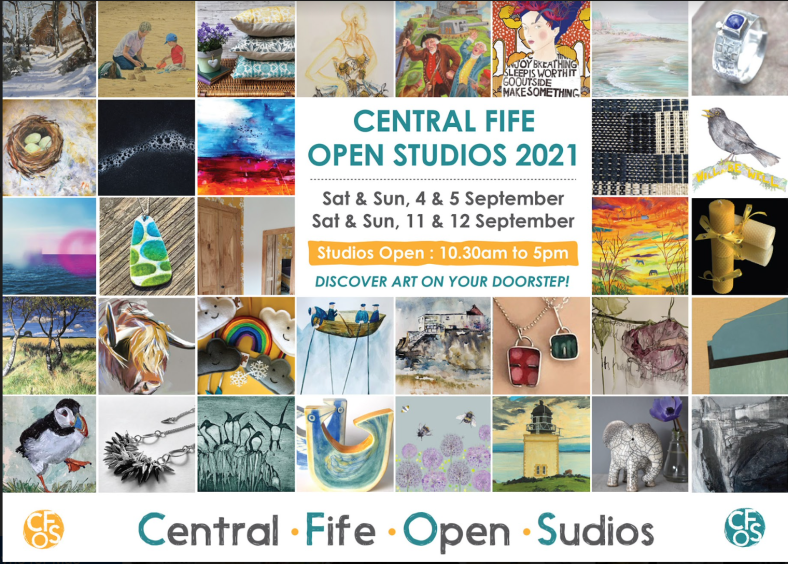
Jane Francis and Marion Barron have both taken part in this event separately for several years, and this will be the first time that their work will be gathered in one space: from finished pieces to work in progress and new sight lines. They will be available to talk about their work from 10.30 to 5 each day, and will each have pieces for sale.
Category Uncategorized
Quote: Joan Miro
‘I work like a gardener…Things come slowly…Things follow their natural course. They grow, they ripen. I must graft. I must water…Ripening goes on in my mind. So I am always working at a great many things at the same time.’
Quote: Tim Adams on Elizabeth Fraser
“Fraser’s ecstatic vocals, which carried just a hint of her growing up in Grangemouth…were not only hair-raising, they also dwelt in unique soundscapes of her own devising. Her lyrics formed an invented language, words chosen for texture rather than meaning. ”
Lockdown yearnings
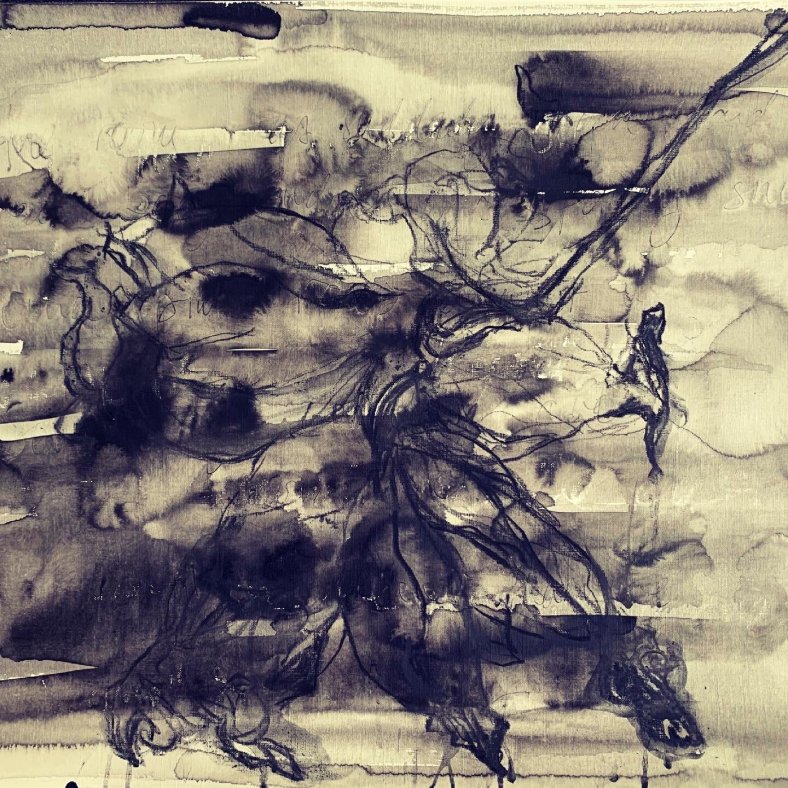
During our days of true lockdown here in Scotland, in March and April, I found it easy to go in to my studio when I could, ie when my daughter wasn’t needing too much help with schoolwork, and found a kind of instinctive mark making is what suited me best. Looking at a book of work by Rebecca Salter, and thinking about Japanese influences such as wabi sabi and Tanizaki’s ‘In Praise of Shadows’, I made a serious of simple line and texture pieces. Then I found an urge to start creating vessels of sorts, turning 2 dimensions into unexpectedly exciting and successful 3 dimensions.
Then normality began to creep back in, I took on a commission leading a community arts project, leading seven local artists to make their own work inspired by history and heritage. I was able to organise the last few bits and pieces of renovations for Glisk, and I started opening the gallery space at Glisk to the public on Fridays. I lost that simple time I had had just to go in and allow myself to create things. I’m not saying the days of the lockdown were pleasant, I was filled with anxiety about the disease itself, about my children’s school work, and making sure we could get food and other resources. But looking back there was something that I gained and have since lost again.
A few weeks ago I also started a course on Saturday afternoons, at home, with Brigid Collins, who is a great artist and teacher some of whose courses I’ve had the luck to be take in the past. Something about the subject she presented, ‘Poems and Plants’ really resonated with me. Another aspect of lockdown I found myself enjoying was the way that without a tight and parsimonious grip on things, the local council had been waylaid in their attempts to ‘deal’ with weeds. They began sprouting out of pavements and grass edges. The weather this summer in Scotland was warm, sometimes even hot, and we were outdoors a lot more, walking and walking, and the sudden lushness of the surroundings was gleeful. There were hardly any cars on the roads; so it was peaceful and smelled fresh. In reality this is what I want for the world, but i’m in such a minority that I barely ever bother talking about it. The times I have attempted to, when involved with local improvement groups and such, it’s always such a painful and tiresome experience going up against the ones who like things just as they are and are bitterly furious at people like me even suggesting…..
I would design a world where cars were kept to the periphery of towns and housing, I would build around the pedestrian, children’s play spaces, and wild liminal areas. High Streets would ban cars, and visitors would have to park on the outskirts and walk in to visit local shops selling local produce and services. People would live on high streets. I know some towns have this kind of peripheral parking, but our town is not allowed this. When people who live here express this desire we are sneered at. How dare we question how it is? Huge lorries thunder along our high street constantly because a stevedoring firm was given the go-ahead to double operations. Driving huge lorries along ancient streets is obviously no picnic for the driver, but try living on those streets. I think people get used to a certain level of misery. We walk along our high streets, the street our school is on, and the vehicle levels are huge and constant. Loud, stinking, and our bodies are aware of not being able to relax because they’re so dangerous. toddlers have to be held on to tightly, and i’ve seen the panic on parents’ faces when one decides to use their body and set of at a run. Is this really what we want for our children? Apparently it is, because those who make decisions about this give it the stamp of approval.
So the quiet of lockdown was so lovely. The growing of green things so lovely. The slowing of time so lovely. I yearn for those things to be what we have all the time, to have this when we don’t have a terrifying illness stalking us. I demand an answer from those who design life this way, why?
Quote: R.D. Laing
“The condition of alienation, of being asleep, of being unconscious, of being out of one’s mind, is the condition of the normal man.
Society highly values its normal man. It educates children to lose themselves and to become absurd, and thus to be normal.
Normal men have killed perhaps 100,000,000 of their fellow normal men in the last 50 years.”
Quote: Steve Haines
“Please don’t try too hard to think or rationalise your way out of trauma. The old parts of the brain that deal with trauma do not know how to do these things.”
Quote: Steve Haines, Trauma is Really Strange
Quote: C.G. Jung
“Trees in particular were mysterious, and seemed tome direct embodiments of the incomprehensible meaning of life. For that reason, the woods were the place that I felt closest to its deepest meaning and to its awe-inspiring workings”
Quote: Rebecca Solnit
Leave the door open for the unknown, the door into the dark. That’s where the most important things come from, where you yourself come from, and where you will go. Three years ago I was giving a workshop in the Rockies. A student came in bearing a quote from what she said was the pre-Socratic philosopher Meno. It read, “How will you go about finding that thing the nature of which is totally unknown to you?” I copied it down, and it has stayed with me since. The student made big transparent photographs of swimmers underwater, and hung them from the ceiling with the light shining through them, so that to walk among them was to have the shadows of swimmers travel across your body in a space that itself came to seem aquatic and mysterious. The question she carried struck me as the basic tactical question in life. The things we want are transformative, and we don’t know or only think we know what is on the other side of that transformation. Love, wisdom, grace, inspiration – how do you go about finding these things that are in some ways about extending the boundaries of the self into unknown territory, about becoming someone else?
Certainly for artists of all stripes, the unknown, the idea or the form or the talk that has not yet arrived, is what must be found. It is the job of artists to open doors and invite in prophesies, the unknown, the unfamiliar; it’s where their work comes from, although its arrival signals the beginning of the long disciplined process of making it their own. Scientists too, as J. Robert Oppenheimer once remarked, “ live always at the ‘edge of mystery\ – the boundary of the unknown.” But they transform the unknown into the known, haul it in like fishermen; artists get out into the dark sea.
Quote: Rebecca Solnit ‘A Field Guide to Getting Lost’
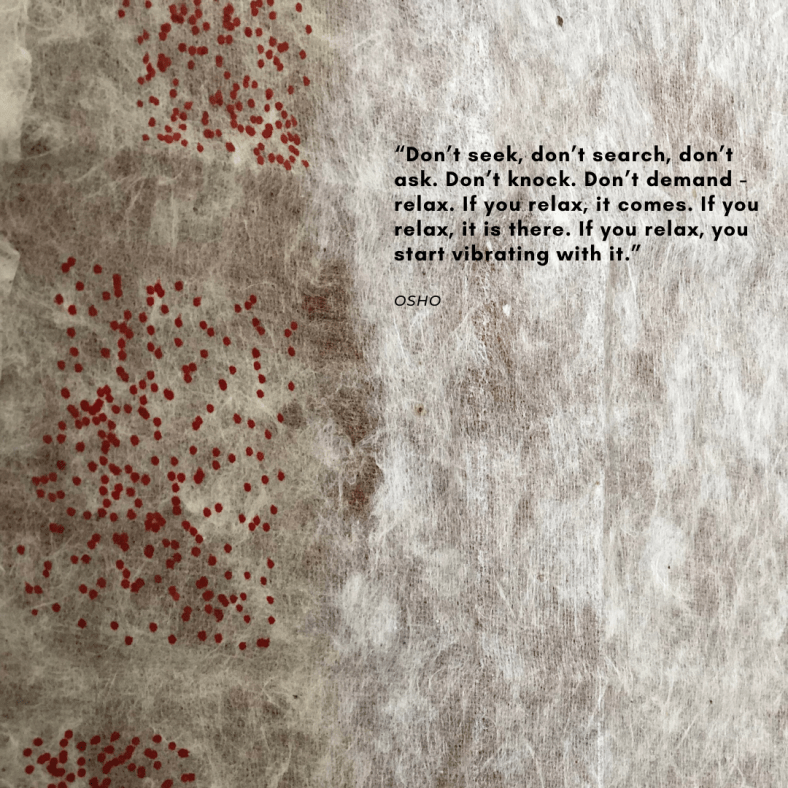
Quote: Osho
“Don’t seek, don’t search, don’t ask. Don’t knock. Don’t demand – relax. If you relax, it comes. If you relax, it is there. If you relax, you start vibrating with it.”
Glisk: noun, Scots – the glimmer of sunlight through darkening clouds
I’ve been inhabiting my new studio in Burntisland for a few months now, firstly while the two adjoining shops were being fiercely renovated. For the first few months we took lots of layers out, discovering hidden secrets and beauty and history. With each new discovery I considered it carefully, and decided whether to retain or, if the space needed something else, to mark its passing, cover over or remove. This took a few months, then, just as the space was beginning to come together, the first wave of coronavirus lockdown happened.
Luckily the space has its own entrance (2, actually) and soon I was able to begin using it on my own as an actual studio space. I designed it to fit my working practices perfectly, and to accommodate my visual difficulties in particular. It proved to be a good space to work in. I made lots of sculptural vessels, with textured surfaces and paint, ink, crayon and string and thread. They were tactile, they were comforting and reassuring to make. I didn’t manage to really paint, but that’s fine. I know many artists who didn’t make their usual thing during this crisis, and I think that’s healthy. Some were concentrating on life itself, families, worries, worldwide things. I know the saying goes that when life gets tough that’s when artists get working, but I wonder if that work is immediate? I wonder if the work they are doing isn’t actually going on underground, somewhere deep inside. Some artists had a crazy creative period, digging deeper into their practice. Perhaps they were already doing work which addressed what we are collectively feeling, or perhaps that’s just the way they cope. I think either way is fine.
The good news is that the gallery space adjacent to the studio is also nearly complete, and the venture is called Glisk Studios and Gallery Space. I’m gradually gathering the work of artists I find has some connection to my own, and to each other. I like abstraction, curiosity, being surprised and delighted, opening up. The work I’m currently inviting falls into these categories. in future I want to be surprised by new things being shown to me. Then I’ll combine them with my work and with each other and i’m hoping to be delighted again.
I’m going to treat it as an atelier/boutique for a while, opening one day a week, probably a Friday, for ‘open studio’ days. From 11am – 5pm you’re welcome to come in (current restrictions apply) for a browse and a chat. Hopefully soon some local artisans will be coming in to the gallery space on regular Saturday afternoons to set up as a pop-up shop.