I cannot emphasize enough how important it is for us – citizens gestating in modern demise – to think along with the monstrous, to think along with the edges, to map out new realities.
Sporulation: a ten gifting experiment
I cannot emphasize enough how important it is for us – citizens gestating in modern demise – to think along with the monstrous, to think along with the edges, to map out new realities.
Sporulation: a ten gifting experiment
I consider music to be a tool in my studio.
Fred Tomaselli, in conversation with Joe Figg, Inside the Painter’s Studio, Princeton Architectural Press, 2009
Why do I need music while I’m painting? There’s something about the act of entering which I find in each. I find the temporality of music to be similar painting. I don’t know if paintings are like music – yes I think it probably is. Music for me is a way to directly tap into a particular body mind situation, feeling, mood or memory, and so I have specific musicians and albums and pieces of music that I use, quite a wide repertoire, although I often get into one thing for a period of time and listen to it over and over again. I take this so seriously that I often won’t listen to the music I’m using to paint at other times of the day.
Music adds temporality to paintings because it reflects the physical actions of painting, which happen over time. There are the actions which occur at the time, the ‘push-pull’ of paint passages against each other, and the gaps between episodes, which are in effect between layers. When you look at a painting, it can go on forever because the painting act is embodied in the paint, in pigment, and especially in the fluidity of the carrier, ie water or medium. A painting has ‘passages’, which I’ve always imagined to be music, to be temporal like music rather than some other, purely visual, sense.
For the artist, and for the audience if they are informed, the memory of doing the work can be reanimated over and over again by listening to the same music as was playing when it was made.
Really I just often think of how I want to paint pictures like how music feels to me. It’s difficult to express verbally, because of course that is the point – both music and painting can express what can’t be said in language, they are their own languages for showing emotions and experiences, which can tap into the actual feeling. Or rather, I suppose, if you experience memory as a set of physical emotions. Maybe not everyone experiences memory like that, or emotion either.
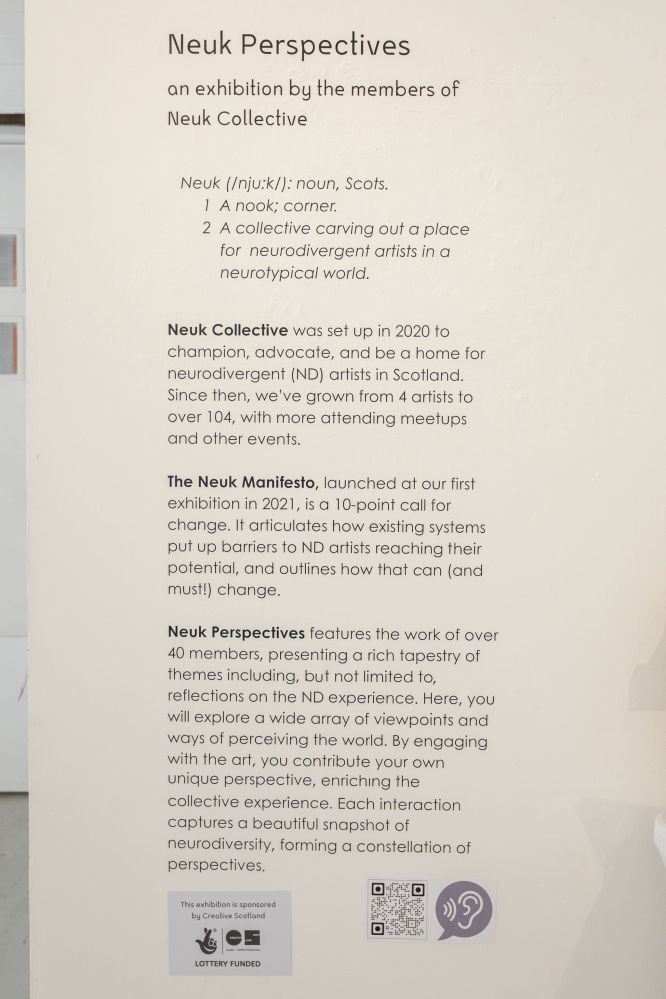
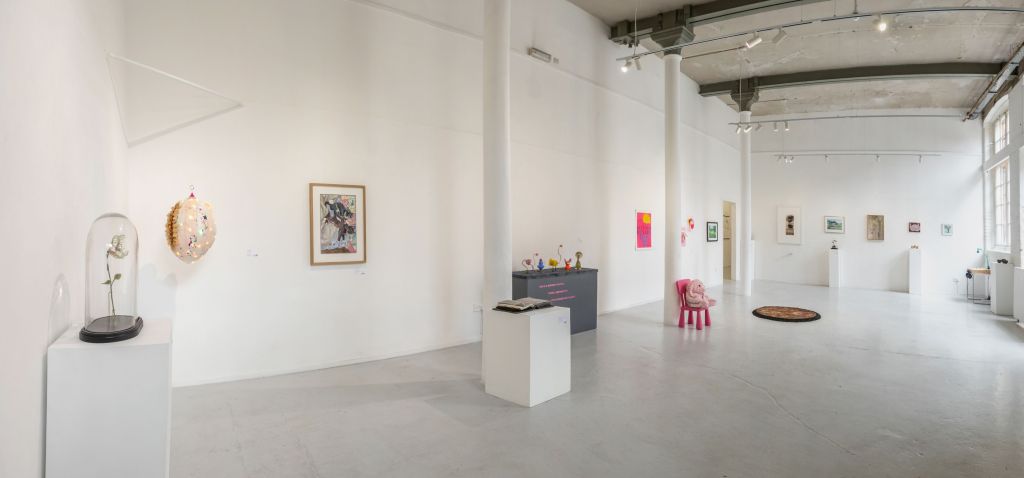
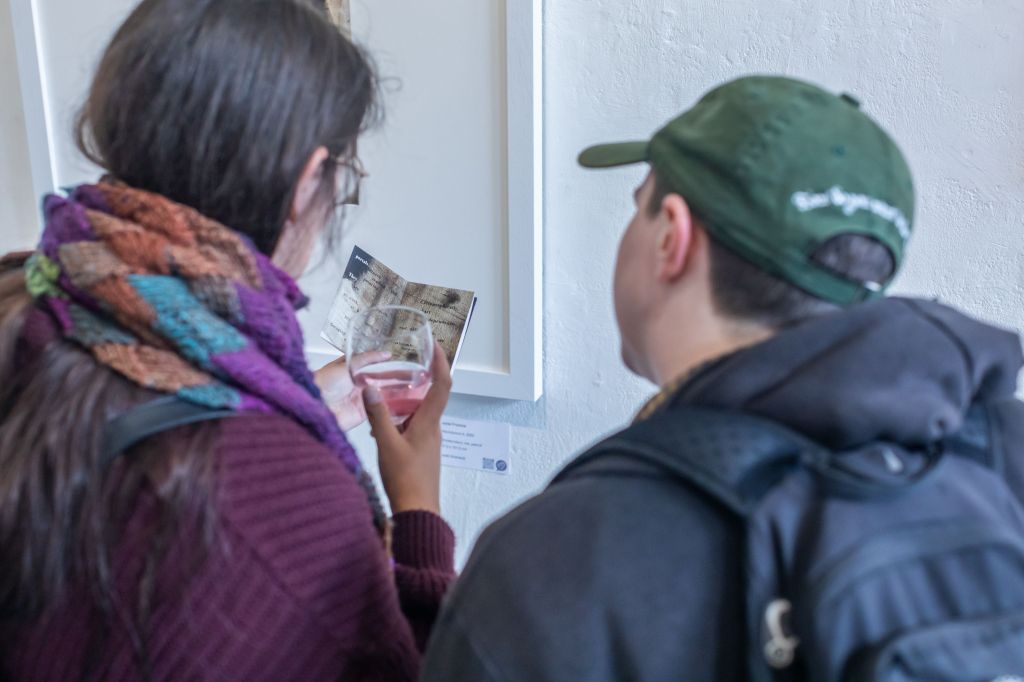
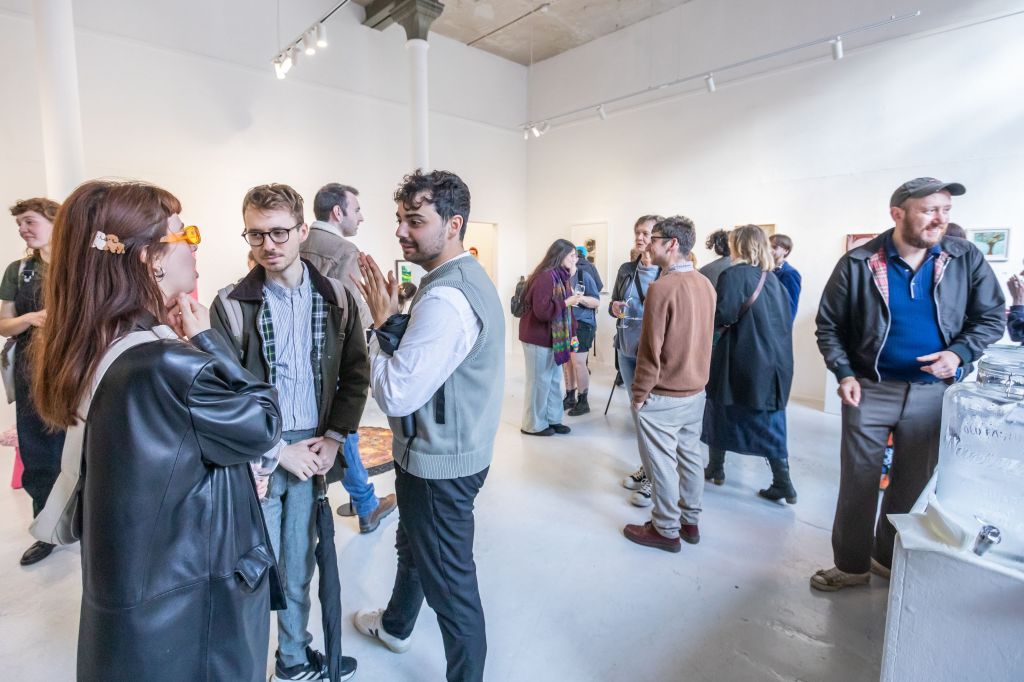
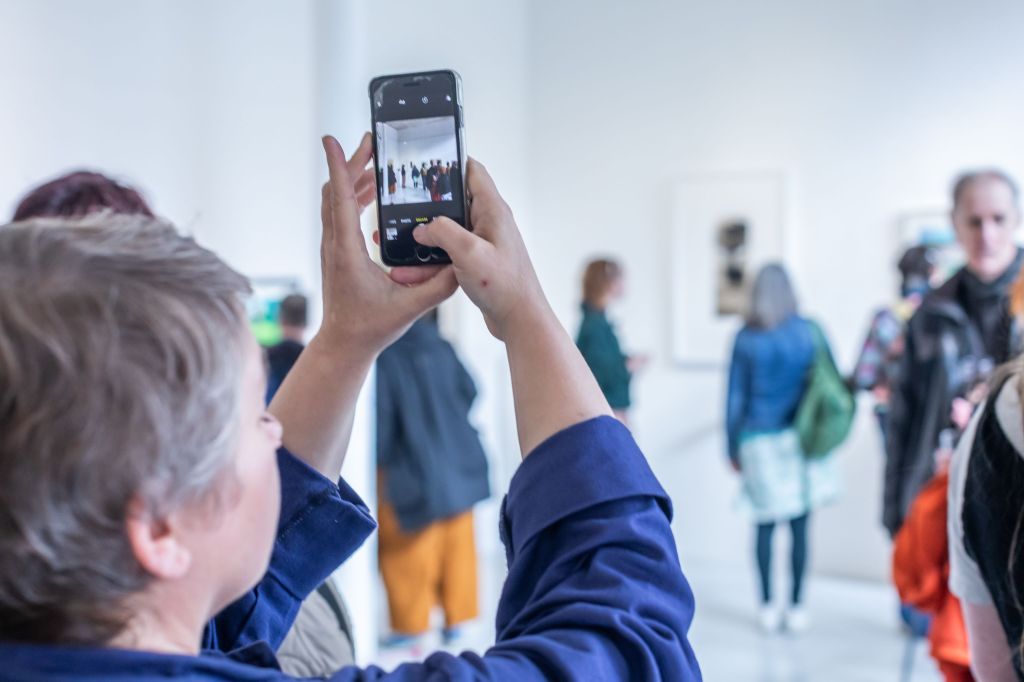
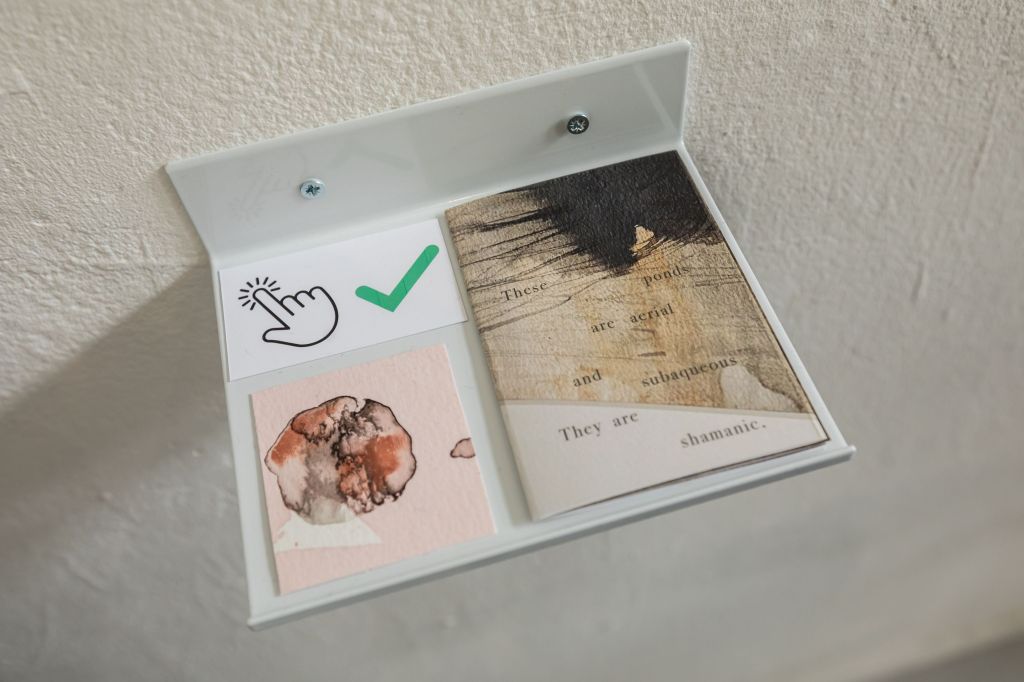
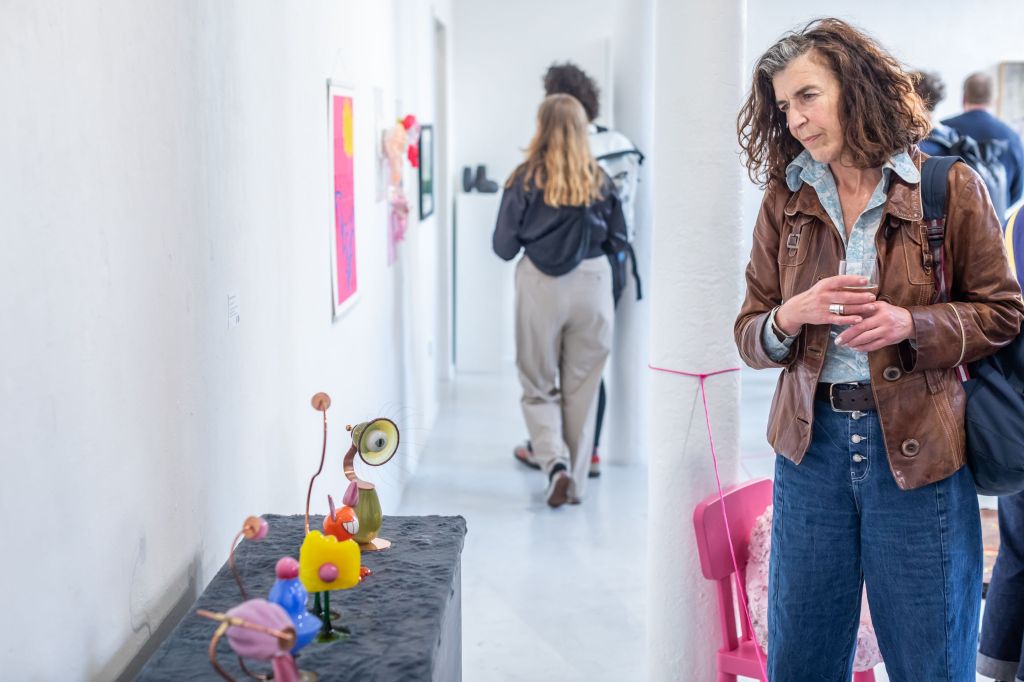
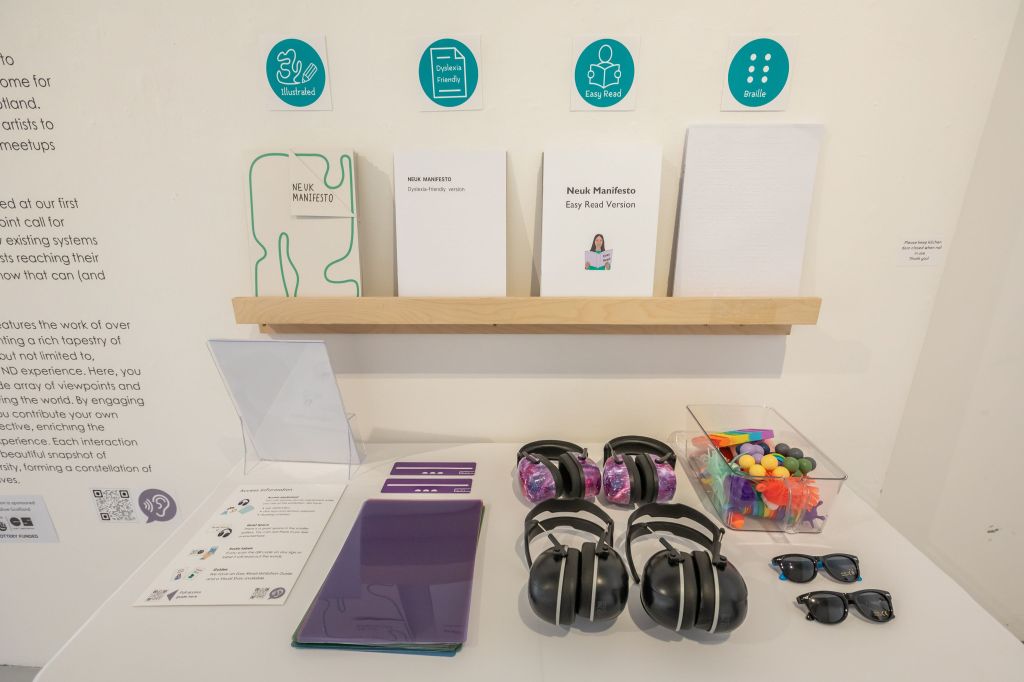
I have a piece being shown as part of this lovely joint exhibition. The piece is called Neuroponds 4, and it was created as part of my Create:Inclusion year of research and practice development. It has been so great to be a part of the exhibition, and the organisation, Neuk Collective. Their aim is to create a nook, a corner, carving out a place for neurodivergent artists in a neurotypical world. The team who did the curating of the work, and organising the gallery, are members who are being paid professionally for their work, which is totally great, and how it should be for disabled artists.
The space looks really good – its the WASPS Patriothall Gallery, which has two rooms. Photographer Chris Scott (instagram chrisdonia) has made a great job of the photography of the opening event and of the work itself.
It will continue to be open Wed – Sun until the 28th July, 11am 5pm.



I think it is important to recognise if you are artist or not. Build a life and a career that accommodates your being an artist instead of trying to be an artist. It’s either something that’s in you or it’s not, and you cannot fake it. I would say to not worry about being an artist or trying to make art, just kind of make whatever you have to make, and then build a life around that. I think that one of the biggest breakthroughs for me, just realising….because I went through a period where I was just trying to make art, and consequently I made things that were really imitative. There was no real model or precedent for what I liked to do, but when you realise that you just have to do what you do and not worry about whether or not it fits the mold or model of what art is, then you’re truly making innovative or breakthrough – and at the very least honest – work.
Inside the Painter’s Studio, Joe Fig, Princeton Architectural Press, 2009
But the reason they create good paintings is not because they’re “paintings”; it’s not because they’re well painted either. It’s because they’re painted with a kind of agenda that that artist brings to it. And that’s a big difference. I have my agenda; that’s what I do whenever I show up to make a sculpture, a painting, or a drawing. I am enacting my perception rather than making a “good” painting because some of the best paintings are really at times the worst paintings you could make. They’re all wrong. You know…there are only five good impressionist painters, and there are like fifty thousand bad impressionists and they are still making those bad impressionist paintings. Why are those few good? Why is someone making an impressionist painting today awful? It’s not because they’re painting it badly, it’s because because they just don’t have a reason to paint it. So that is what I mean when you think about what painting is
Inside the Painter’s Studio, Joe Figg, Princeton Architectural Press | New York, 2009
writing is like a different dimension, different from sculpture or painting in the that each way of creating is like a different dimension. So you start stacking them up [combining painting, sculpture, writing, etcetera], and then it’s like now you’ve got something interesting. But they’re not – time is not the same as space, even though they happen at exactly the same…you know, though they’re completely interlinked, they’re entirely different things. So that’s kind of how I think of writing, it’s like I’m looking at the same thing but from somewhere so different…
from Inside the Painter’s Studio, Joe Figg, Princeton Architectural Press, New York, 2009
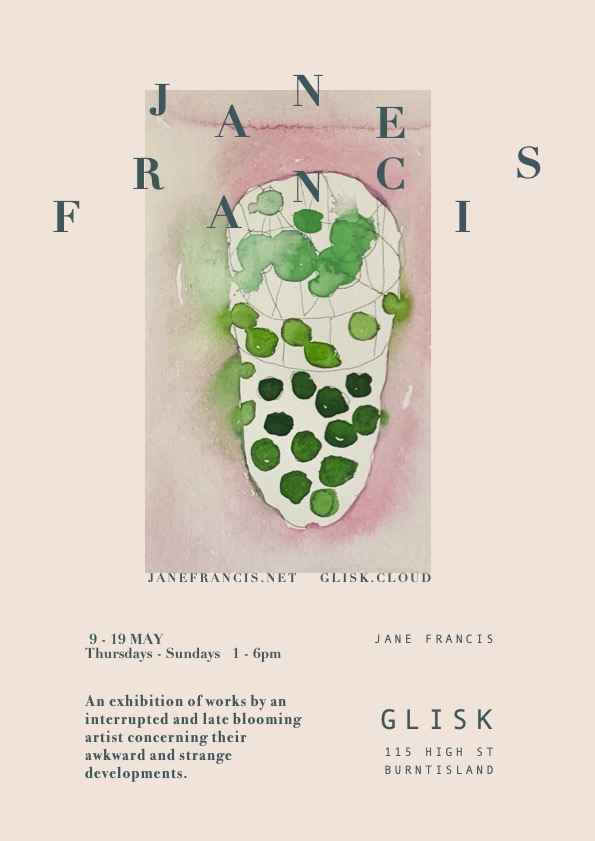
I’m putting together a selection of my paintings and other works made over the last ten years. After a gap of 24 years I began making art again in 2014, and since then I’ve been on a journey which has been circuitous, elated, awkward, and just a bit strange…
Open dates are Thursday 9th to Sunday 19th May 2024, 11am – 6pm. I’ll be taking a break the following weekend 23rd – 25th, but will leave up the work until 2nd June to suit any other visitors by appointment.
I think that artists have a responsibility to work as fiercely as the can in their studios in exchange for the privilege of making things that the world doesn’t necessarily ask for. I think that artists should be engaged in the world in ways outside of their artwork – politically, socially, not necessarily through their artwork, but just as citizens. I don’t much believe in the hermit artist, in other words. And I believe in some overall sense of, you know, generosity of spirit in the work that gets transmitted, hopefully to the audience. Those are my tenets.
Inside The Painter’s Studio, Joe Fig, Princeton Architectural Press, 2009
How many artists are there? Choose where you want to work, choose. Invent your task, do it! All together to destroy reactionary ideas, bourgeois ideology, individualism, solemnity, all white, European, capitalist ways of existence!
Saborami, 1973
We have energy if we get enough sleep, if we eat robustly and eagerly, and if life is filled with shared wanderings that we can look forward to. We need repetition, and comfort, and rest, but also ample space to dream, and the power to bring some of those dreams into reality. So many people under capitalism lack all of those things. Their jobs are a chronic illness they must cradle, manage, and make endless sacrifices for every single day.
Work is a Chronic Illness – Medium
 JANE FRANCIS