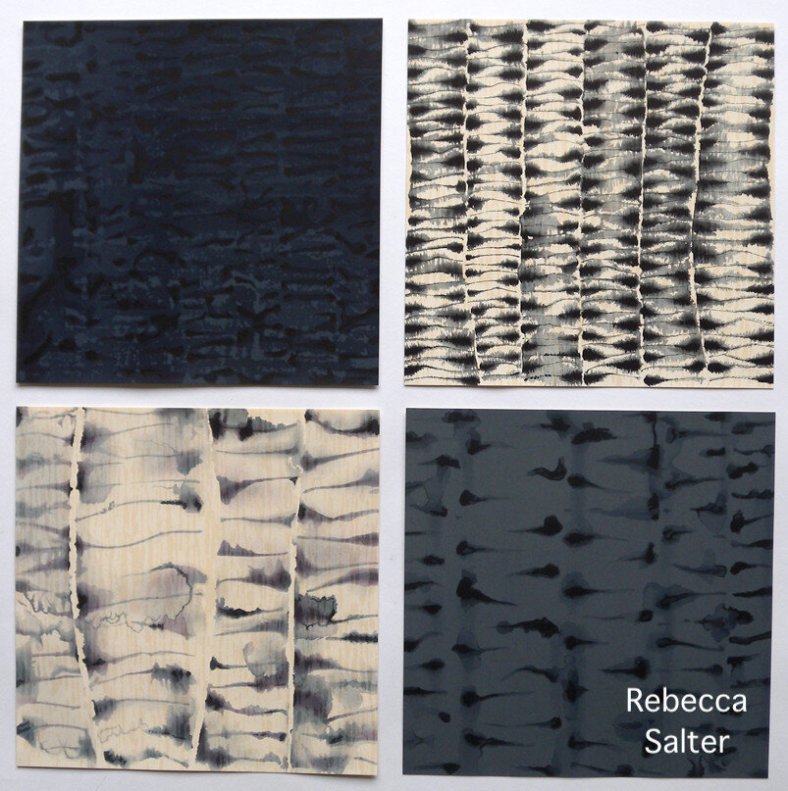
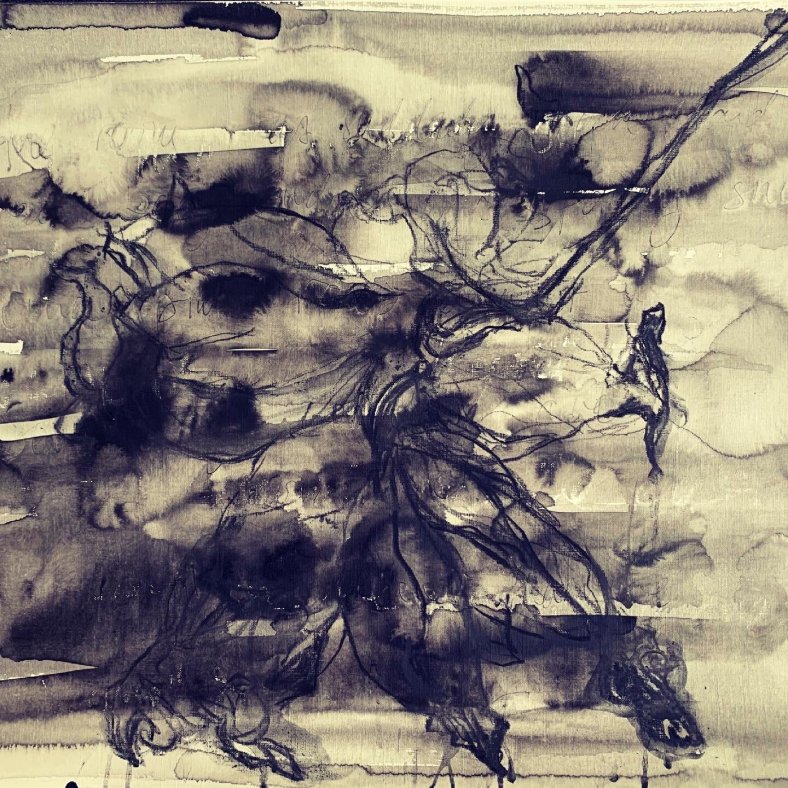
During our days of true lockdown here in Scotland, in March and April, I found it easy to go in to my studio when I could, ie when my daughter wasn’t needing too much help with schoolwork, and found a kind of instinctive mark making is what suited me best. Looking at a book of work by Rebecca Salter, and thinking about Japanese influences such as wabi sabi and Tanizaki’s ‘In Praise of Shadows’, I made a serious of simple line and texture pieces. Then I found an urge to start creating vessels of sorts, turning 2 dimensions into unexpectedly exciting and successful 3 dimensions.
Then normality began to creep back in, I took on a commission leading a community arts project, leading seven local artists to make their own work inspired by history and heritage. I was able to organise the last few bits and pieces of renovations for Glisk, and I started opening the gallery space at Glisk to the public on Fridays. I lost that simple time I had had just to go in and allow myself to create things. I’m not saying the days of the lockdown were pleasant, I was filled with anxiety about the disease itself, about my children’s school work, and making sure we could get food and other resources. But looking back there was something that I gained and have since lost again.
A few weeks ago I also started a course on Saturday afternoons, at home, with Brigid Collins, who is a great artist and teacher some of whose courses I’ve had the luck to be take in the past. Something about the subject she presented, ‘Poems and Plants’ really resonated with me. Another aspect of lockdown I found myself enjoying was the way that without a tight and parsimonious grip on things, the local council had been waylaid in their attempts to ‘deal’ with weeds. They began sprouting out of pavements and grass edges. The weather this summer in Scotland was warm, sometimes even hot, and we were outdoors a lot more, walking and walking, and the sudden lushness of the surroundings was gleeful. There were hardly any cars on the roads; so it was peaceful and smelled fresh. In reality this is what I want for the world, but i’m in such a minority that I barely ever bother talking about it. The times I have attempted to, when involved with local improvement groups and such, it’s always such a painful and tiresome experience going up against the ones who like things just as they are and are bitterly furious at people like me even suggesting…..
I would design a world where cars were kept to the periphery of towns and housing, I would build around the pedestrian, children’s play spaces, and wild liminal areas. High Streets would ban cars, and visitors would have to park on the outskirts and walk in to visit local shops selling local produce and services. People would live on high streets. I know some towns have this kind of peripheral parking, but our town is not allowed this. When people who live here express this desire we are sneered at. How dare we question how it is? Huge lorries thunder along our high street constantly because a stevedoring firm was given the go-ahead to double operations. Driving huge lorries along ancient streets is obviously no picnic for the driver, but try living on those streets. I think people get used to a certain level of misery. We walk along our high streets, the street our school is on, and the vehicle levels are huge and constant. Loud, stinking, and our bodies are aware of not being able to relax because they’re so dangerous. toddlers have to be held on to tightly, and i’ve seen the panic on parents’ faces when one decides to use their body and set of at a run. Is this really what we want for our children? Apparently it is, because those who make decisions about this give it the stamp of approval.
So the quiet of lockdown was so lovely. The growing of green things so lovely. The slowing of time so lovely. I yearn for those things to be what we have all the time, to have this when we don’t have a terrifying illness stalking us. I demand an answer from those who design life this way, why?


 JANE FRANCIS