On the practical day-to-day level of working, the vocabulary of art leads us into […] false certainties, foolish mastery, and into repetition, which is surely a sin against the future. There is no need to worry about losing one’s base or ‘identity’ […] when situated within a new set of objects and social environment. The task is to focus on that moment and to work (or, I might say, ‘to act’). If one rings too well-planned a strategy and ‘experience’ to the task, one remains in some personal past, and begins to make lies.
The Native American (Cherokee) artist, essayist and poet has proposed substituting the noun ‘art’ with the verbs ‘work’ and ‘act’. Introduction to Sami Art and Aesthetics, Aarhus University Press, 2017.
Year 2023
Quote: Svein Aamold
The philosopher Michael Kelly thinks of aesthetics as ‘critical thinking about the affective, cognitive, moral, political, technological, and other historical conditions constitutive of the production, experience, and judgement of art.’ Aesthetics, then, should be regarded as more than questions of beauty, sublimity, autonomy, intentionality, expression, meaning, etc. With regard to projects of art, aesthetics may also invigorate ethical and political issues, the uncanny or the abject, the nature-based or site-specific, the processual or relational, or the like.
Unstable Categories of Art and People by Svein Aamold; introduction to Sami Art and Aesthetics, Aarhus University Press, 2017
Quote: Édouard Glissant
I have always said that place is crucial. There is no globalisation on the basis of a series of dilutions into thin air. Because if there is dilution, there is no relation. Relation can weave itself only between entities that continue to exist…The true relation is not from the particular to the universal, but from the Place to the world-totality, which is not totalitarian but the opposite: diversity.
p69 – Introduction to a Poetics of Diversity, The Glissant Translation Project, trans. Celia Britton, Liverpool University Press, 2020
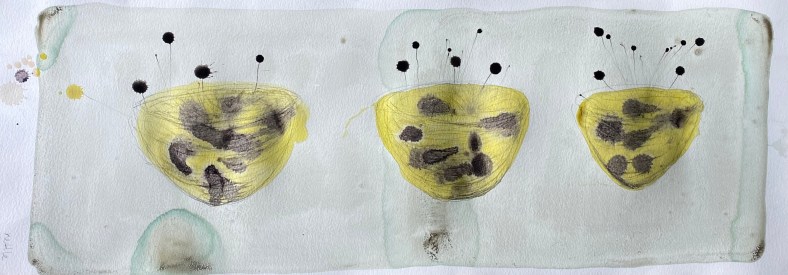
Making ink from foraged plants
I have incorporated hand made inks into my current work, which I love because the process is elongated and multi layered. The foraging and processing of the plants is an elemental part of it. I don’t gather plants from exquisite gardens or areas of affluence and abundance, but scrappy wall-growing shrubs, weedy marginal places in towns and cities, and soon-to-be-developed away land. I feel an affinity with this. I look at how much insects prefer certain things, such as clover on a lawn about to be mown, or an overgrown ivy. Perhaps I’ll make an ink out of these next. I like how Jason Logan, whose book Make Ink was in inspiration to me, makes his ink from plants, and even abandoned bits of masonry and iron, he forages for on scrappy in-between areas in cities and towns.
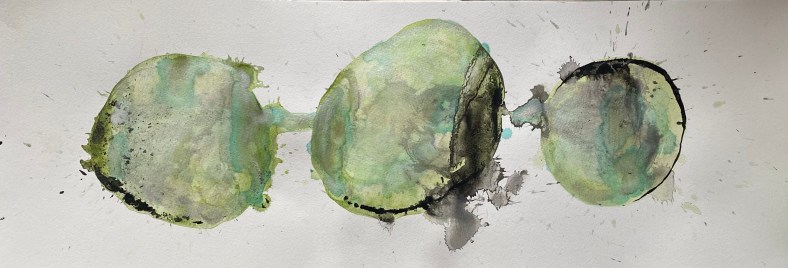
Burrowings and foragings
I would say that my research over the last year or so for my current practice has been taking the forms of burrowings and foragings, and that’s not unlike how I usually approach interests of mine; special interests or SPINS as they’re sometimes called in autistic circles. It was listening to Katherine May’s podcast* where she spoke to Bayo Akomolafe, and hearing them speak of burrowing and foraging as metaphors for sharing ways to live brought to light that my research has taken these forms. It’s also enlightening for me as finding their wonderful conversation is an example of it. It’s a way of digging in, deepening the search, and unearthing the right pieces to form the connections, the patterns. The right thing seems to just come along and take your notice at just the right time.
* How We Live Now, 30th June 2023: Bayo Akomolafe on fugitive ideas.
Quote: Timothy Morton
‘The ecological society to come, then, must be a bit haphazard, broken, lame, twisted, ironic, silly, sad. Yes, sad, in the sense meant by a character in the British science fiction television series Doctor Who: sad is happy for deep people. Beauty is sad like that. Sadness means there’s something you can’t quite put your finger on. You can’t quite grasp it. You have no idea who your boyfriend really is. This is not my beautiful wife. Which means in turn that beauty isn’t graspable either, beauty as such – which means that beauty must be fringed with some kind of slight disgust, something that normative aesthetic theories are constantly trying to wipe off. There needs to be this ambiguous space between art and kitsch, beauty and disgust. A shifting world, a world of love, of philos. A world of seduction and repulsion, rather than authority. Of truthiness rather than rigid true versus rigid false.’
Timothy Morton, All Art is Ecological p17 – Penguin Green Ideas 3
Quote: Timothy Morton
‘”This is not my beautiful house…’ And this is because things are mysterious, in a radical and irreducible way. Mysterious comes from the Greek muein, which means to close the lips. Things are unspeakable. And you discover this aspect of things, as if you could somehow feel that un-feelability, in the beauty experience, or as Keats puts it, the feel of not to feel it. This ‘and you may find yourself’ tentative hesitant subjunctive quality isn’t just a temporary blip and it certainly isn’t a phenomenon that only occurs to sentient beings, let alone conscious ones, let alone human ones. It’s sort of everywhere, because being isn’t presence.’
Timothy Morton, All Art is Ecological pp11-12 – Penguin Green Ideas 3
Quote: You Might Be Autistic
If left to devices your own
Uniquely structured your
Sentence unfolds
Communication topographic
Not linear
You Might be autistic my dear
You Might Be Autistic – twitter
Quote: Sonia Boue
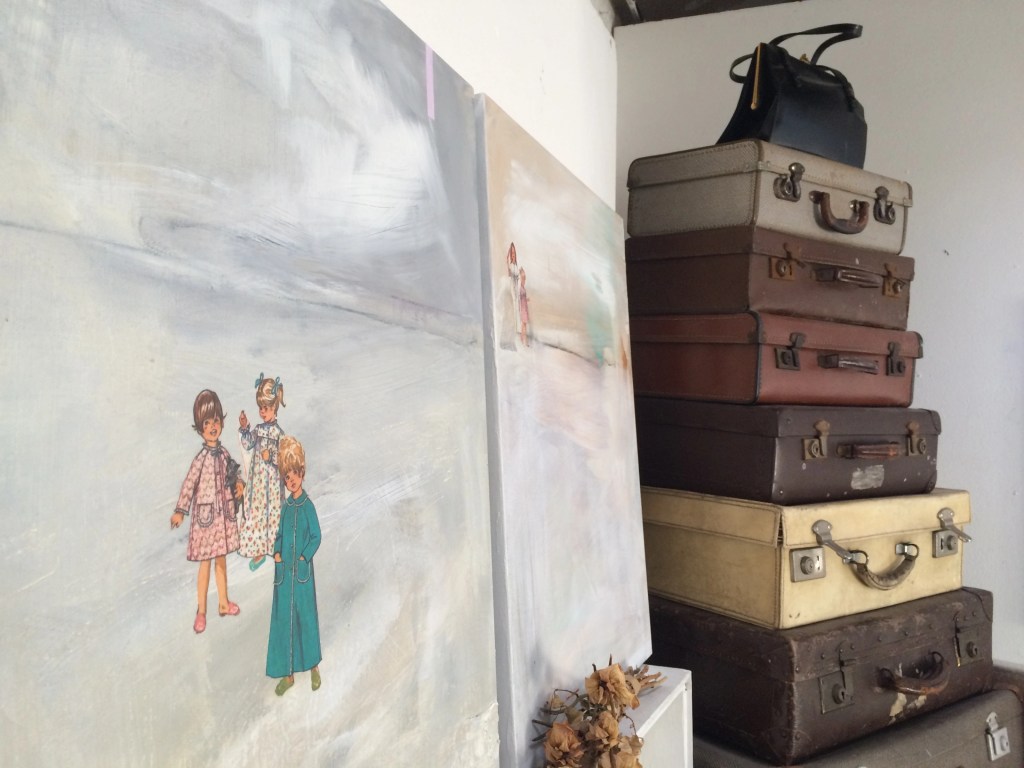
‘Artists: Too directed a ‘meaning’ in your work takes the work away from art’s startlingly languageless country. To simply ‘understand’ diminishes pleasure; points too narrowly. When we don’t apprehend, it extends art as something to look at further.’
Sonia Boue
Quote: Karen Jaimes
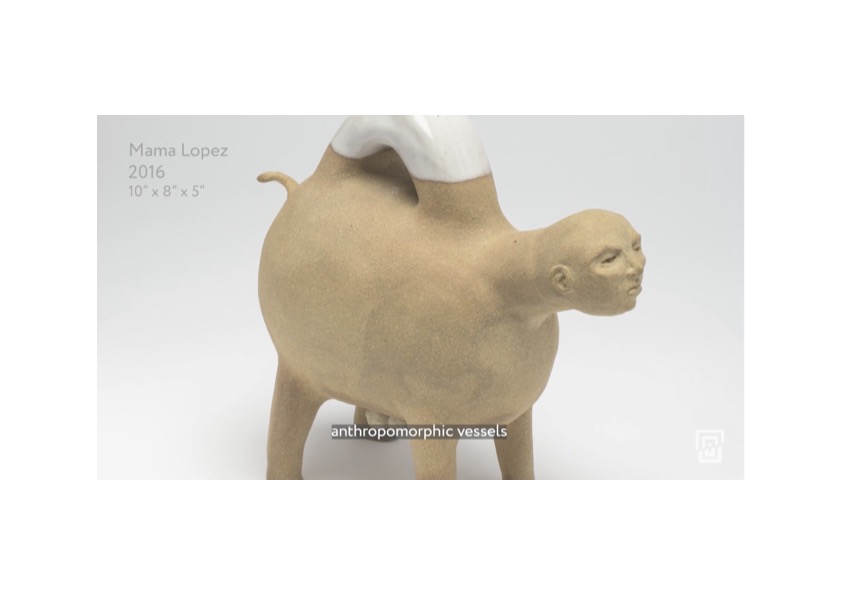
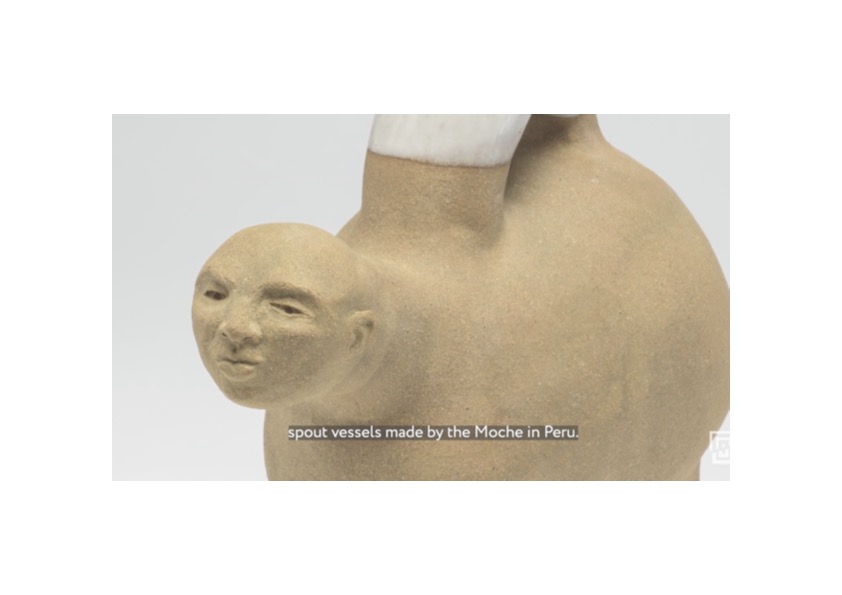
“I started creating anthropomorphic vessels as a way to connect with these ancient stirrup spout vessels made by the Moche in Peru. It’s a way of sort of revering the animals for their incredible capabilities and honouring people at the same time. Cos we’re all sort of closely related, plants, animal, humans, we’re all closely related. This is the theme which has been permeating throughout my life. I think its in my blood somehow.
Indigenous ways are not lost. Indigenous people are here. I’m just trying to tap into some of that native language, as a way to keep these epistemes and these ancient ways of thinking alive.” Karen Jaimes’s bold political sculpture | Testudo Studio Spotlights
 JANE FRANCIS