I don’t know what I knew before.
(from ‘I Feel it All’)
I don’t know what I knew before.
(from ‘I Feel it All’)
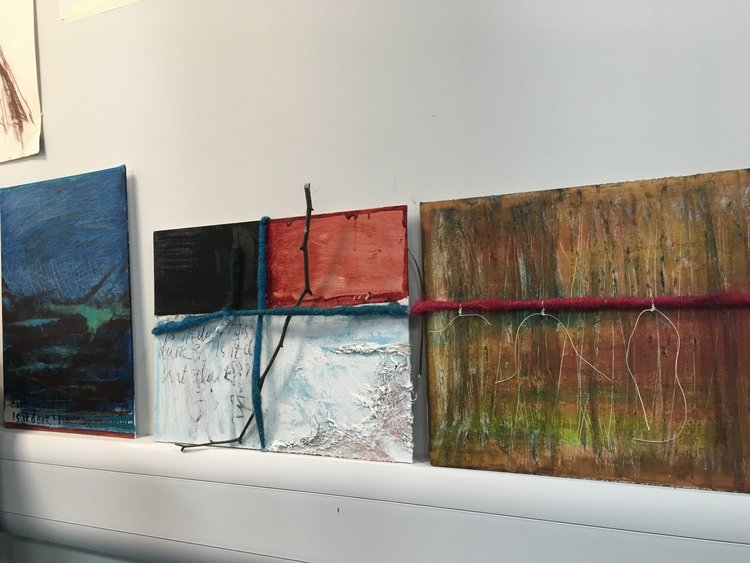
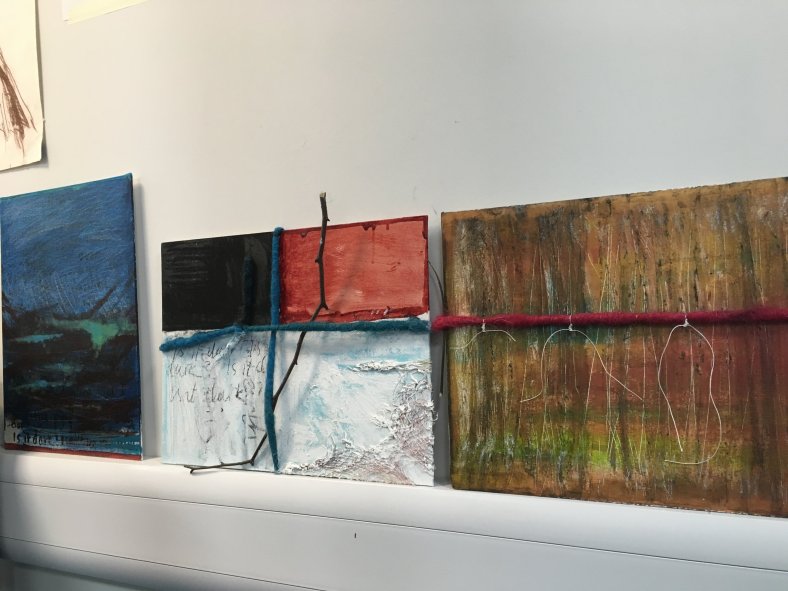
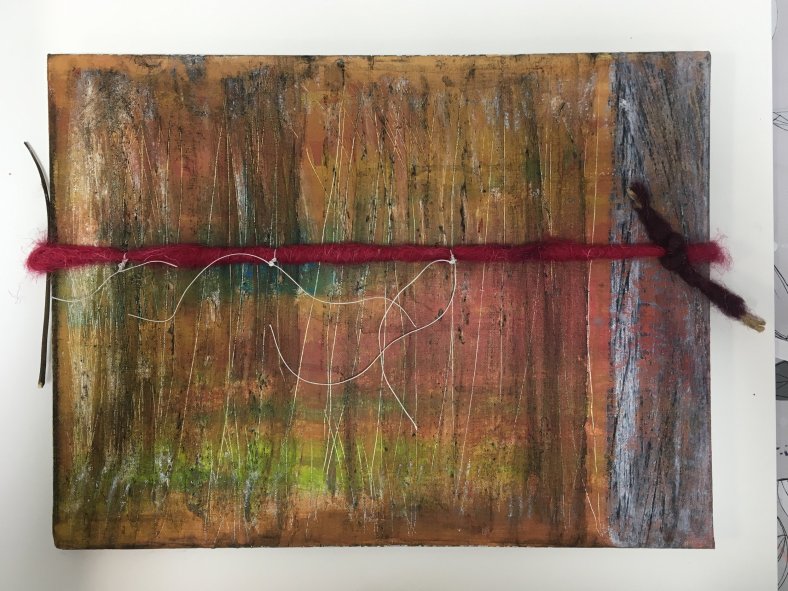
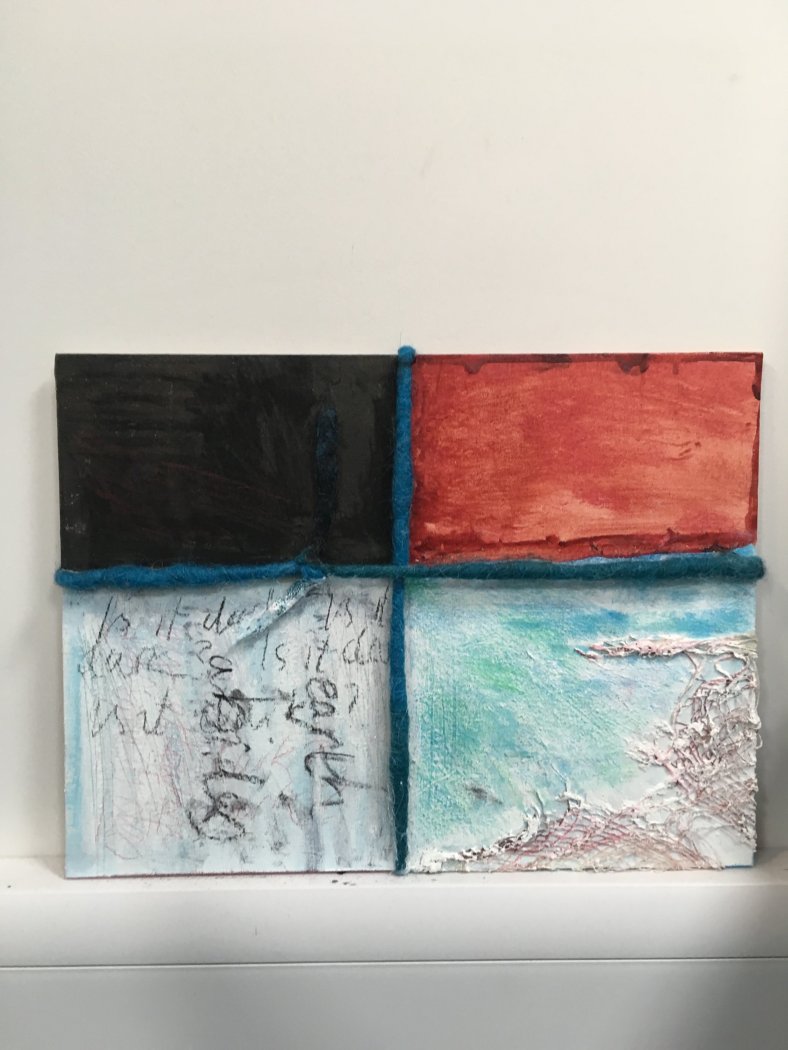
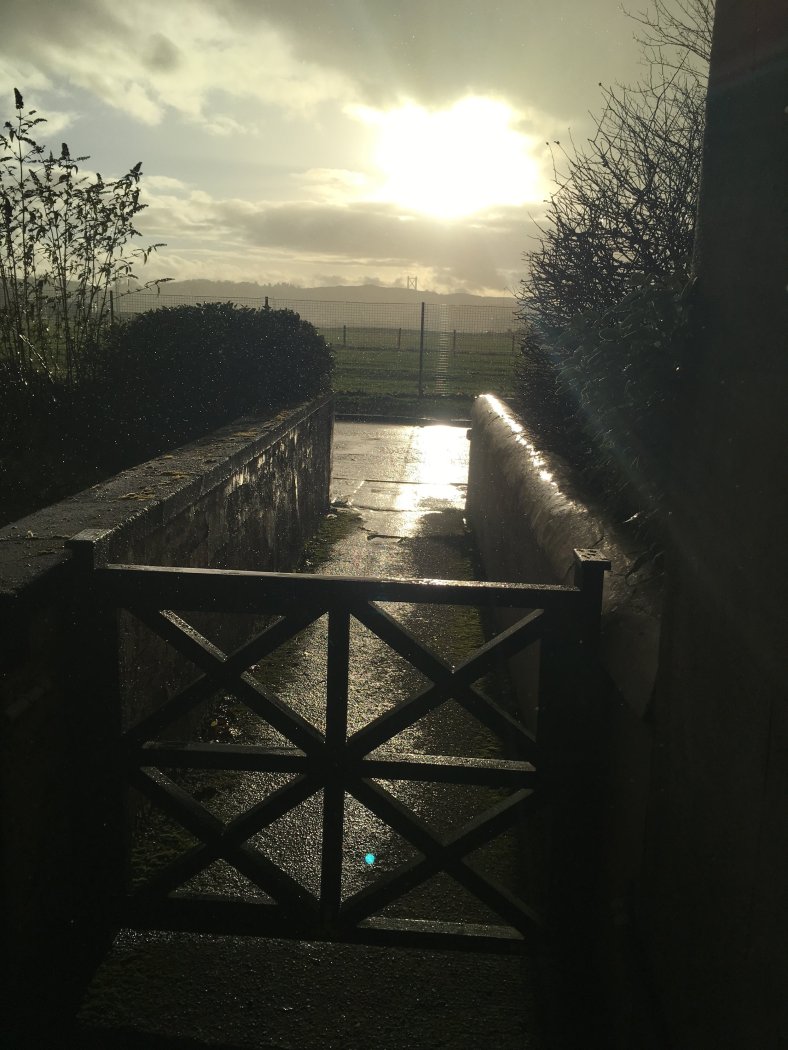
“If I’m not defined by my success, I am defined by my ability to heal. Because we’re all hurt, and we’re all healing.”
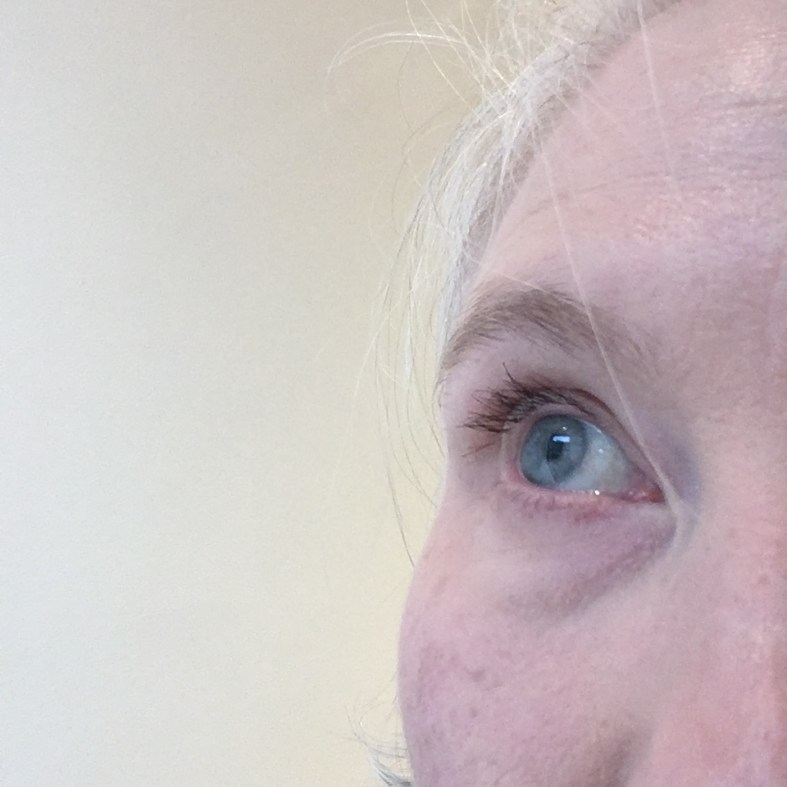
This eye is virtually blind. I was involved in an accident during the summer of 2016 when my torso was crushed when a speed boat hit the one I was sitting on. The accident broke both my collar bones, five ribs on the right side and punctured my right lung, causing hemopneumothorax. Another effect of the crush and broken bones was Purtscher’s Retinopathy which damages the retina permanently. The centre vision of this eye doesn’t exist, it is a great grey hole, no information passes through it, not even strong light. I can’t see your face/head with this eye. I have peripheral vision, so I would know which room I was in, or who I was with (if I knew you). I think this eye looks permanently frightened – as if it is grasping for all it can see. (see blog: PORTRAIT OF A RIGHT EYE 1. My left eye was also damaged but the central vision is not affected, so I see most things with that small window. The world I see is darker, dimmer, and the colours are a bit odd. Details are difficult to grasp. It’s all about information to my brain.
“Painting is a medium of concerted imagination, symbolizing consciousness.”
“Painting is the art which reminds us that time and the visible come into being together, as a pair. The place of their coming into being is the human mind, which can coordinate events into time sequence and appearances into a world seen.
With this coing into being of time and the visible, a dialogue between presence and absence begins. We all live this dialogue.”
“Wait for it. That is , if you don’t get a clear message, do nothing.”
“It takes such a long time to find your language, it’s taken me a long time, and I still think I’m finding it, but I know that I’m closer to a language which is coherent and recognisably mine, but I’ve made many many mistakes along the way.
It’s been quite a struggle. I do feel that when you look at a painting the first thing that you must see is the painting itself and then the image later, and if that happens then the painting is halfway to working.”
“One doesn’t arrive — in words or in art — by necessarily knowing where one is going. In every work of art something appears that does not previously exist, and so, by default, you work from what you know to what you don’t know. You may set out for New York but you may find yourself as I did in Ohio. You may set out to make a sculpture and find that time is your material. You may pick up a paint brush and find that your making is not on canvas or wood but in relations between people. You may set out to walk across the room but getting to what is on the other side might take ten years. You have to be open to all possibilities and to all routes — circuitous or otherwise.
But not knowing, waiting and finding — though they may happen accidentally, aren’t accidents. They involve work and research. Not knowing isn’t ignorance. (Fear springs from ignorance.) Not knowing is a permissive and rigorous willingness to trust, leaving knowing in suspension, trusting in possibility without result, regarding as possible all manner of response. The responsibility of the artist … is the practice of recognizing.
Our culture has beheld with suspicion unproductive time, things not utilitarian, and daydreaming in general, but we live in a time when it is especially challenging to articulate the importance of experiences that don’t produce anything obvious, aren’t easily quantifiable, resist measurement, aren’t easily named, are categorically in-between.
A life of making isn’t a series of shows, or projects, or productions, or things: it is an everyday practice. It is a practice of questions more than answers, of waiting to find what you need more often than knowing what you need to do. Waiting, like listening and meandering, is best when it is an active and not a passive state.
It is the task of the artist to make material form, to give it presence, to make it social; it is the task of the artist to lead the leaders by staying at the threshold; to be an unsettler in the tradition of Ralph Waldo Emerson, one of our first public tricksters: “Let me remind the reader that I am only an experimenter. Do not set the least value on what I do, or the least discredit on what I do not, as if I pretended to settle anything as true or false. I unsettle all things. No facts are to me sacred; none are profane; I simply experiment, an endless seeker with no past.”
Ann Hamilton – visual artist
Quote by Ralph Waldo Emerson – “People wish to be settled; only as far as they are unsettled is there any hope for them.”
A quote I included in a collection of quotes I created when I was very young, still at school, so about 15 or so.
” Turner’s lifelong approach was recognized by colleague Richard Schechner and others to possess a characteristic “incompleteness”—which has been both frustrating and compelling for critics, colleagues, and students. As Babcock and MacAloon 1987 states, the refusal to create a “Turnerian system or semiotics of culture” was “a matter of intellectual and, indeed, moral principle, for his was a laughing, struggling spirit that protested the indignity of any closed system” oxford bibliographies.com
 JANE FRANCIS